

How To Bake Sourdough Bread In A Loaf Pan (Beginner Friendly)

Craving a simple sourdough loaf that is quick and easy to make? Learn how to bake sourdough bread in a loaf pan with this beginner-friendly recipe.
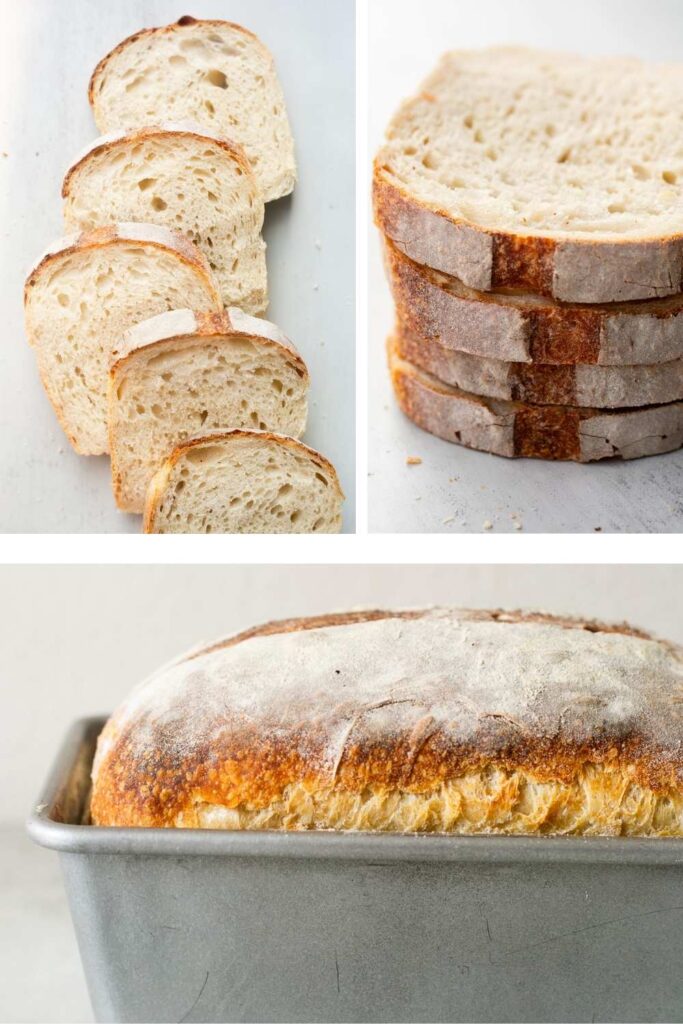
I LOVE baking sourdough bread in a loaf pan because it is simple and quick to make and has a beautiful crumb. Plus it’s easy to slice, making it the perfect breakfast loaf for my kids!
Just like my easy sourdough sandwich bread, you can use this recipe for toast, French toast, grilled cheese sandwiches, and more.
This is an easy, same day recipe that will give you a beautiful loaf to enjoy by suppertime. This sourdough loaf pan bread is easy to shape as well, and chances are you have everything you need in your kitchen to bake it right now.
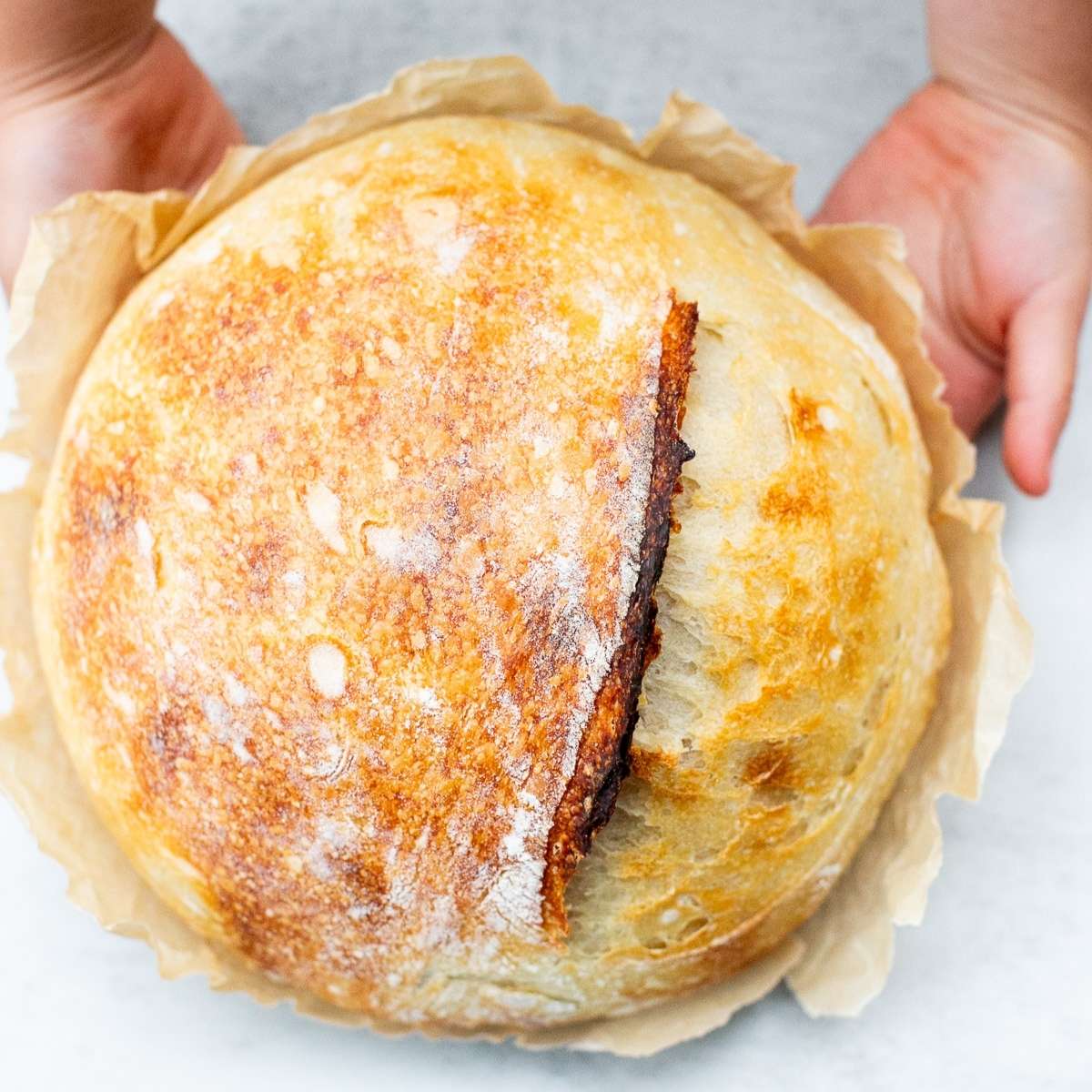
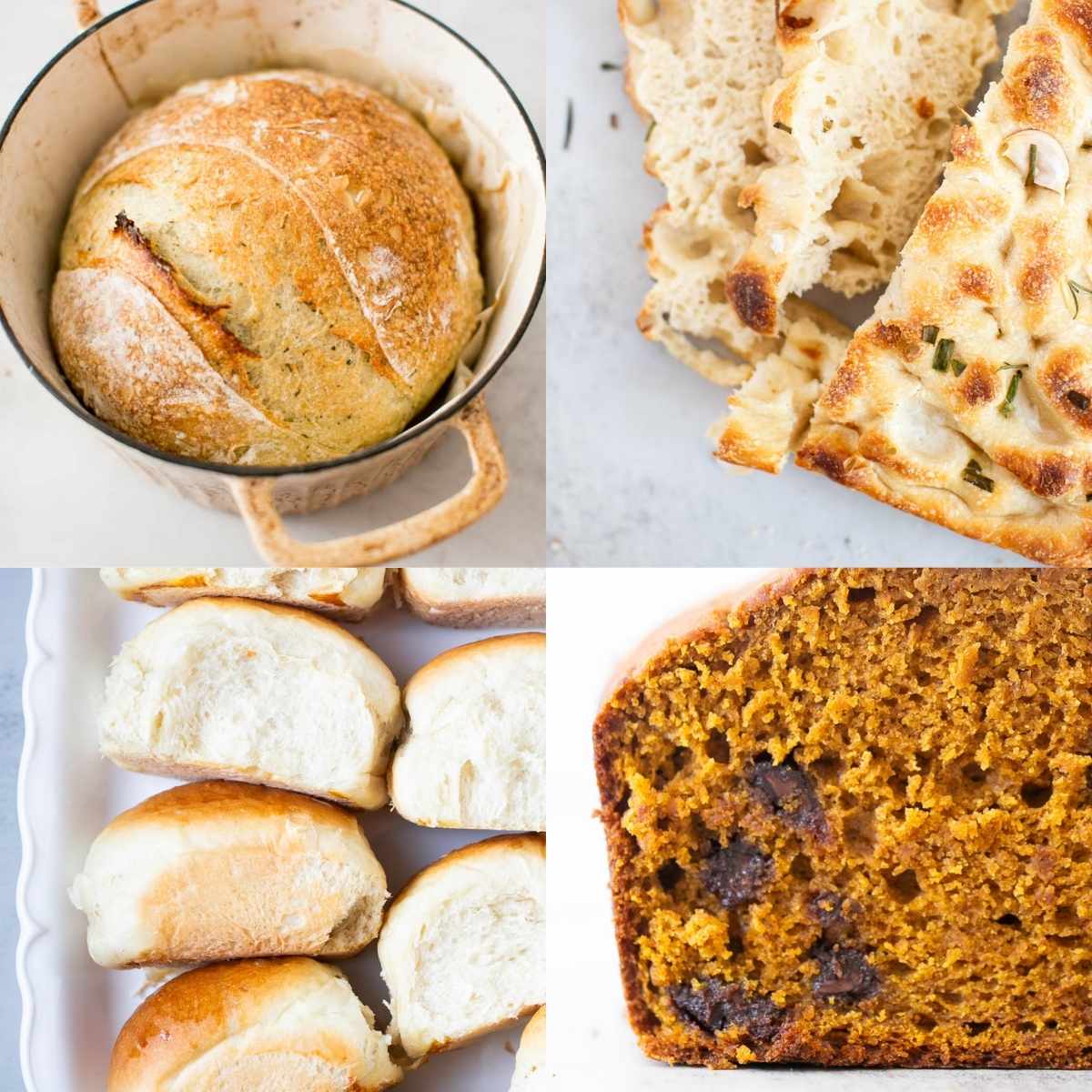
You can convert any of these fun sourdough bread recipes into a pan baked loaf- sourdough double chocolate bread, sourdough jalapeno cheddar, sourdough Dutch oven bread, sourdough gingerbread loaf.
This post contains affiliate links. If you click through and make a purchase, I may make a small commission at no extra cost to you.
Baking Sourdough Bread In A Loaf Pan VS Dutch Oven
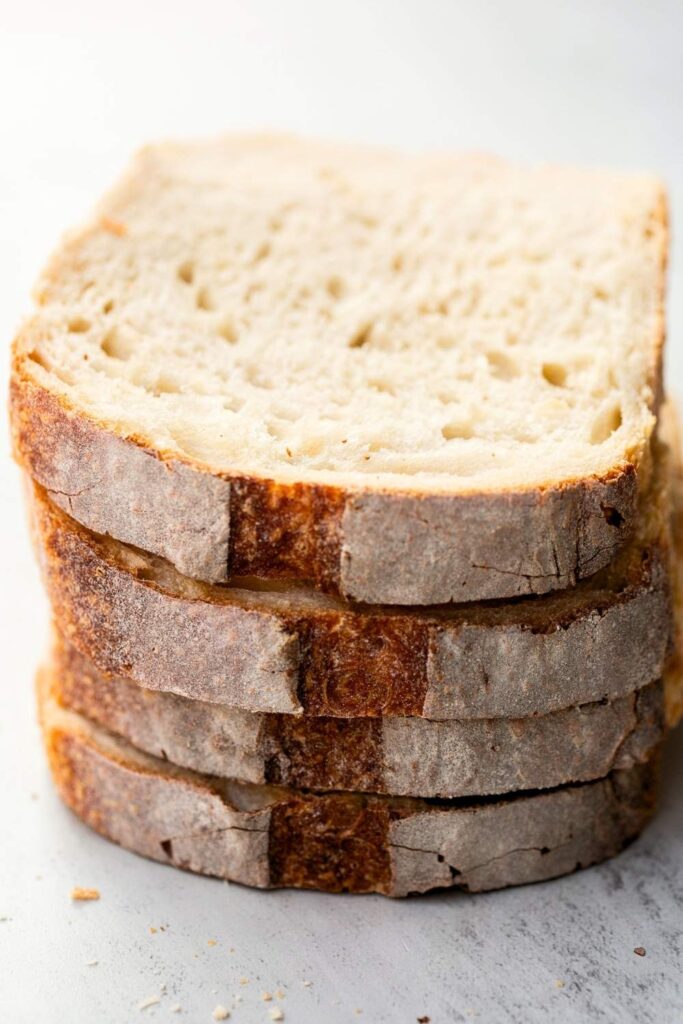
Why use a loaf pan? Sourdough bread baked in a loaf pan is easier to slice than when baking it in a Dutch oven. The slices from a loaf pan are uniform and fit in a toaster easier.
The shape of loaf pan sourdough is also easier to package up and sell if you are marketing your bread! You can also bake more bread loaves at a time as the pans take up less space, making it an economical choice.
Personally, I love sourdough bread and enjoy both shapes- they are both delicious!
Why You’ll Love This Recipe
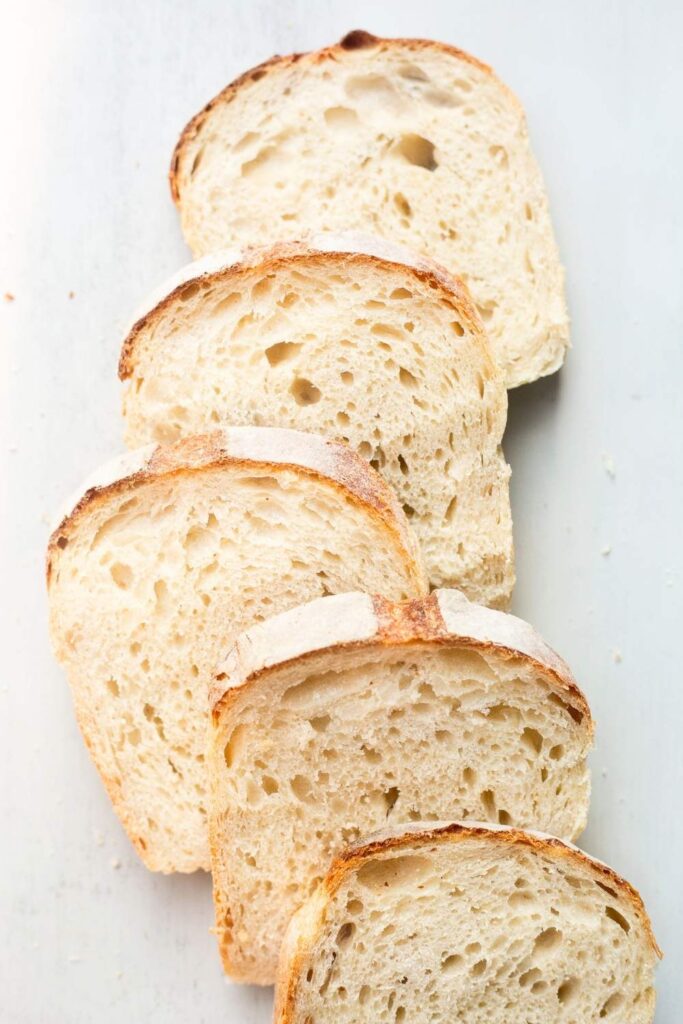
- Baking the bread in a loaf pan will give you an easy to slice bread that is perfect for sandwiches and toast.
- This is a flexible recipe and you can use any type of loaf pan to bake the bread in- I’ve done it in both a 9×5 pan and an 8×4 inch pan.
- This is a great recipe for over-fermented bread- the sides of the pan help the bread keep it’s shape!
- You can take any Dutch oven sourdough bread recipe and convert it to a loaf pan recipe- all you need to do is add a source of steam.
Ingredients
- Bubbly, active sourdough starter (learn how to make one here)
- Bread flour (I like to use organic)
- Water
- Sea salt
*You can add 1-2 tablespoons of olive oil to this recipe for a softer loaf.
How To Create Steam
When baking bread in a Dutch oven with a lid, steam naturally gets trapped inside the vessel during the baking process.
This steam keeps the outside of the bread soft and pliable in the first few minutes of baking, allowing the bread to expand without cracking down the sides. The steam also prevents the bread from drying out too soon and allows for a nice high oven spring.
We need to make sure we provide steam when doing an open bake in a loaf pan. Here’s 3 ways to do so:
- Use a cast iron skillet and fill it with 1.5 cups water. Place the skillet on a lower rack than the bread, and remove it half way through the bake (at the 25 minute mark).
- If you don’t have a cast iron skillet, place a glass pan with 1.5 cups water under the bread, removing it around 25 minutes and continuing the bake.
- Use a second loaf pan and flip it over so that it acts as a “lid” on top of the first pan. Bake with this make shift lid on for 25 minutes, then remove and continue baking. This lid will trap steam the steam for you. Use care when removing the hot pan.
Scoring
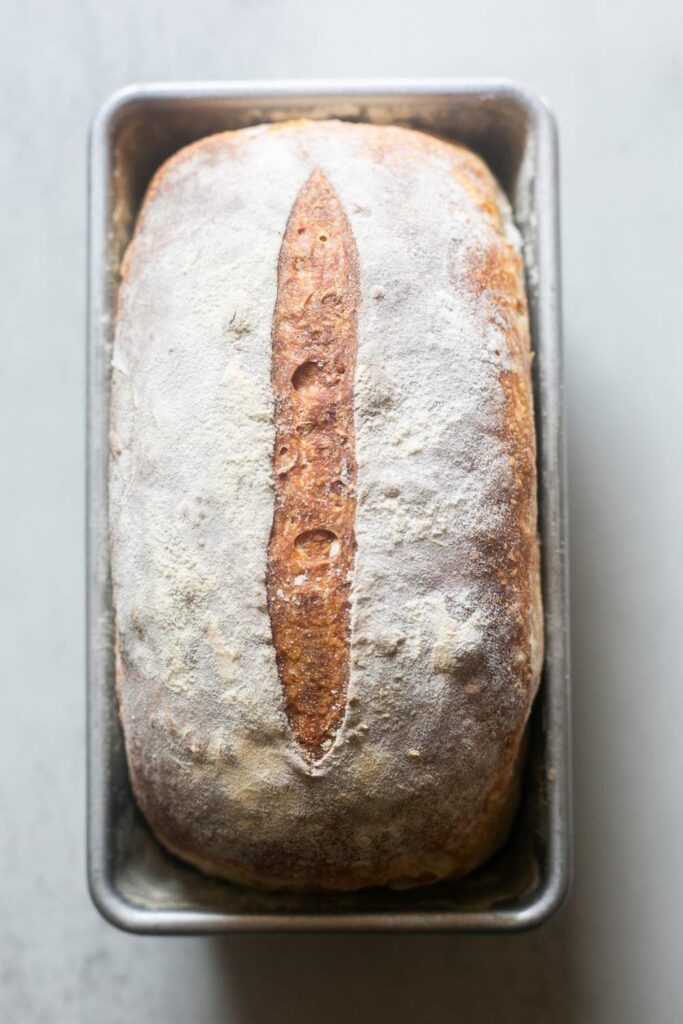
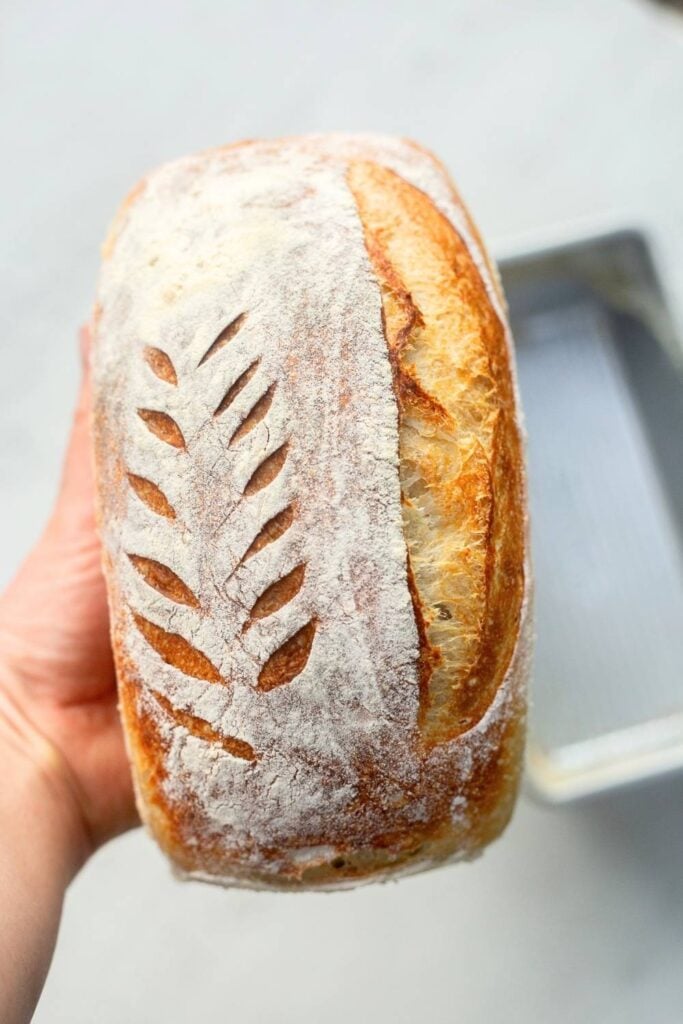
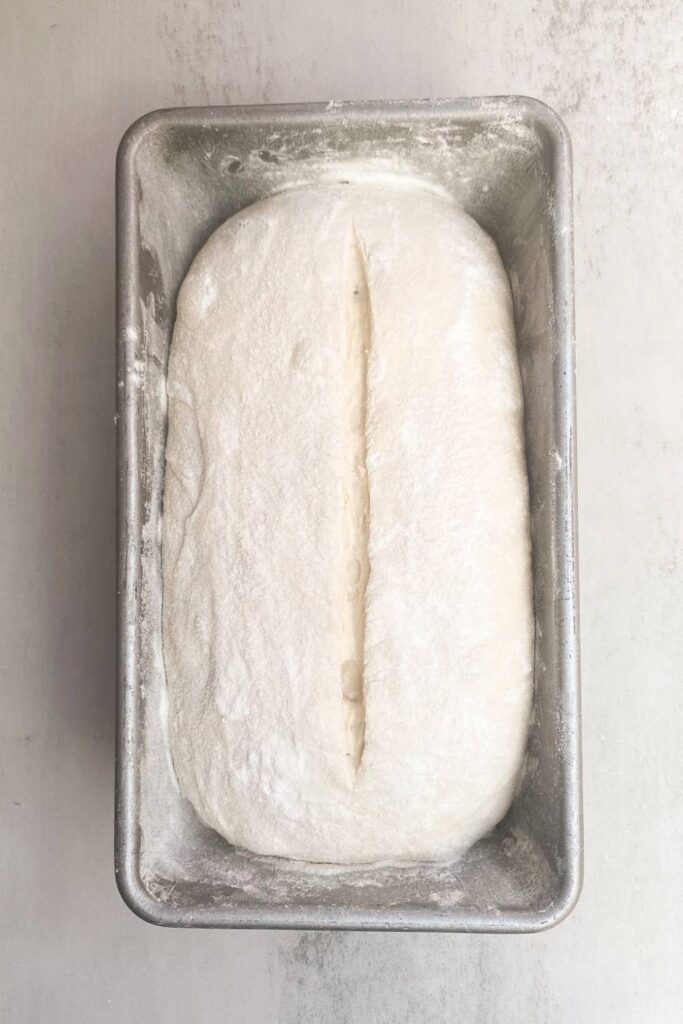
Use a sharp razor to give the bread a quick, deep score. This will give the steam within the dough a specific spot to escape-rather than just exploding out the side of the dough.
Summarize and Save This Recipe Content On:
I have used both a side score and a score straight down the center of the dough, and both have turned out beautifully! If you do an offset score to the side of the dough, you can add a pretty wheat stalk pattern to the side.
Make sure to score the dough using a sharp razor and a confident, deep score. Learn more about scoring sourdough bread here.
Baking Pans
I have used 8×4 inch and 9×5 inch metal pans to bake this bread.
How To Bake Sourdough Bread In A Loaf Pan
This is a same-day recipe and takes between 6-8 hours, depending on the ambient temperature of your kitchen. See notes below to convert this recipe into a long-ferment overnight recipe.
Mix The Dough
Mix together the water and starter in a large bowl. Add the bread flour and salt and mix until a sticky, loose ball forms. Cover the dough with a damp tea towel or plastic wrap and let the dough rest for 30 minutes.
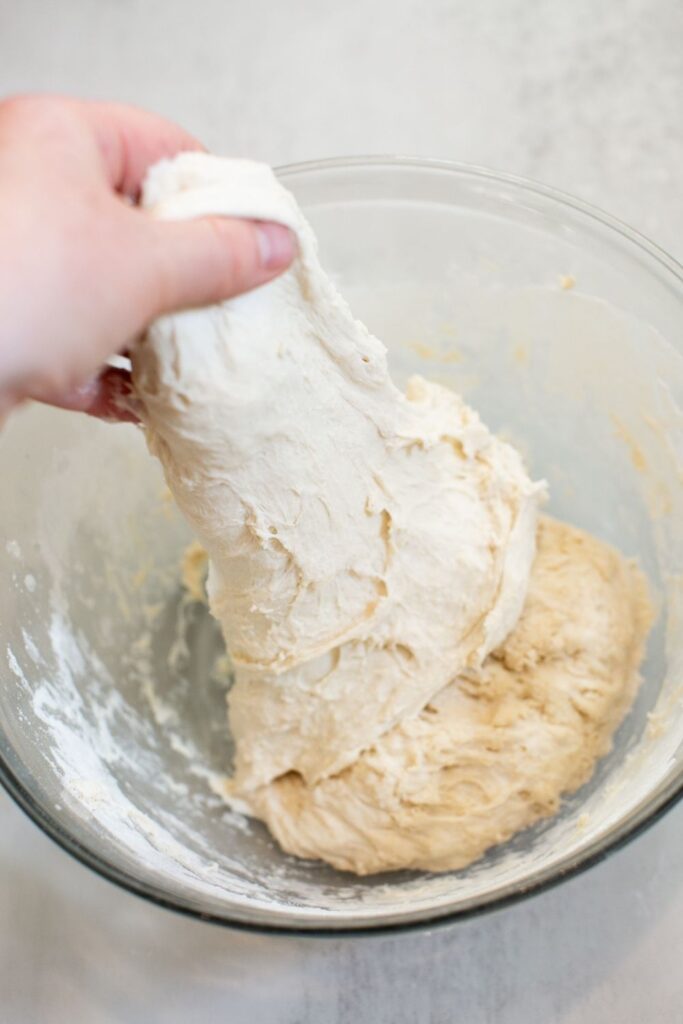
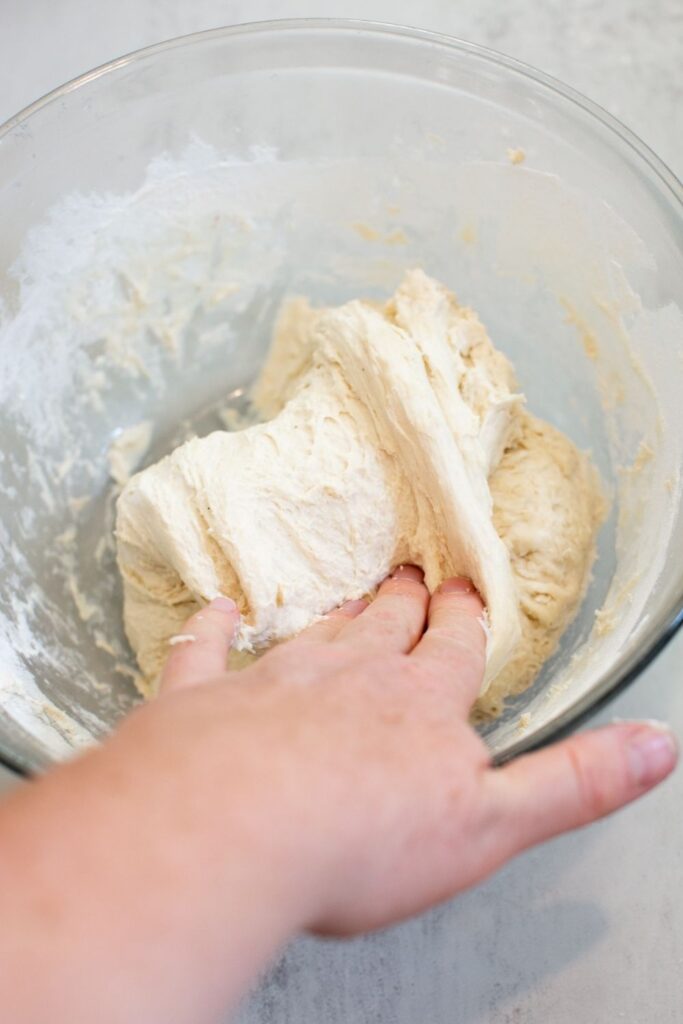
With damp hands, stretch and fold the dough by grabbing one side of the dough and stretching it up and over itself. Rotate the dough and repeat, working around the dough in quarter sections. Repeat until the dough forms a tight ball. (This is one set of stretch and folds). Do 2-4 sets of stretch and folds, spaced 20-30 minutes apart.
Stretching and folding the dough adds strength to the dough- it is a gentle alternative to kneading dough.
Let the dough rise for 4-6 hours or until almost doubled in size. Bulk ferment is done when the dough pulls away easily from the side of the bowl, the top of the dough should be slightly domed, and there should be several air bubbles within the dough. The dough will feel jiggly and light.
Shaping The Dough For A Loaf Pan
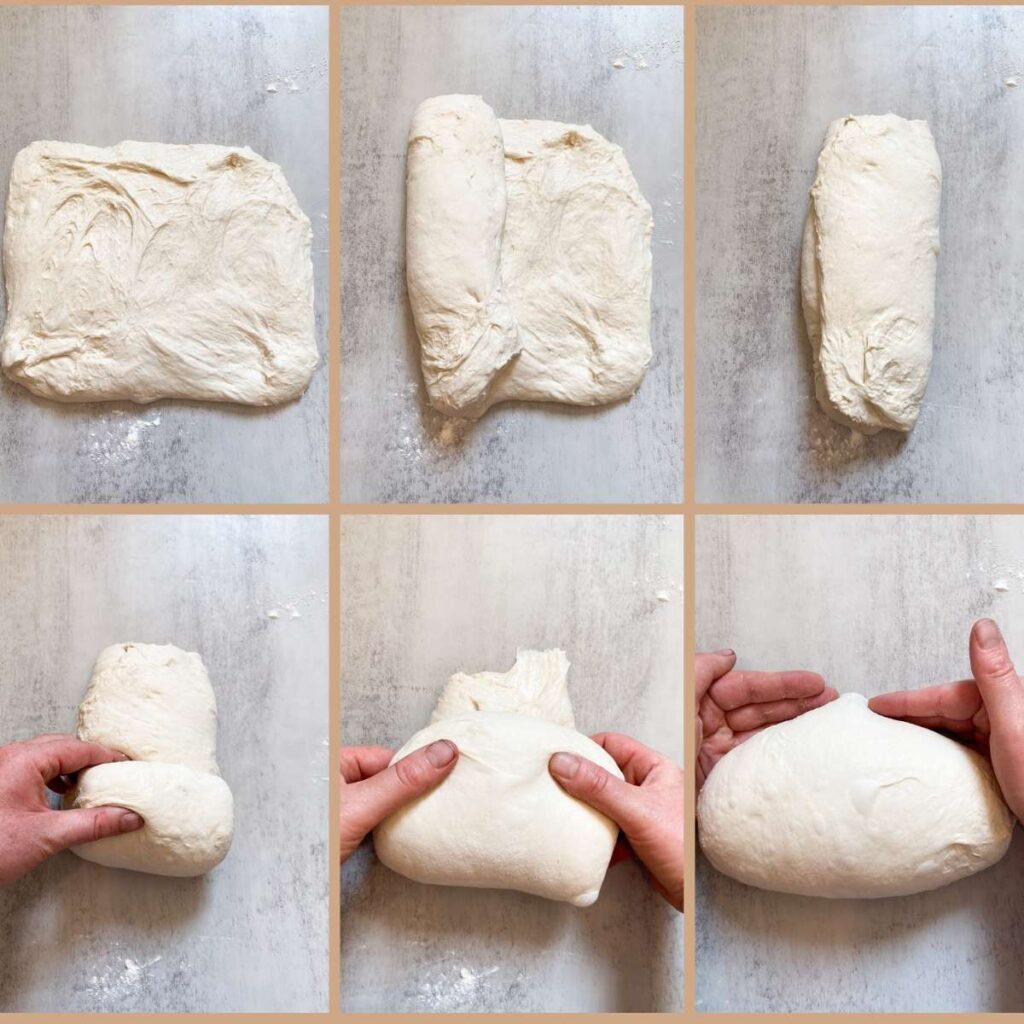
First, dump the dough out onto a lightly floured surface and form into the loose shape of a square.
Pick up the right side of the dough and fold it into the center. Repeat with the left side of the dough.
Now, roll the dough from bottom to top, pulling it towards you several times to create tension in the surface of the dough. The dough will elongate as you pull it towards you.
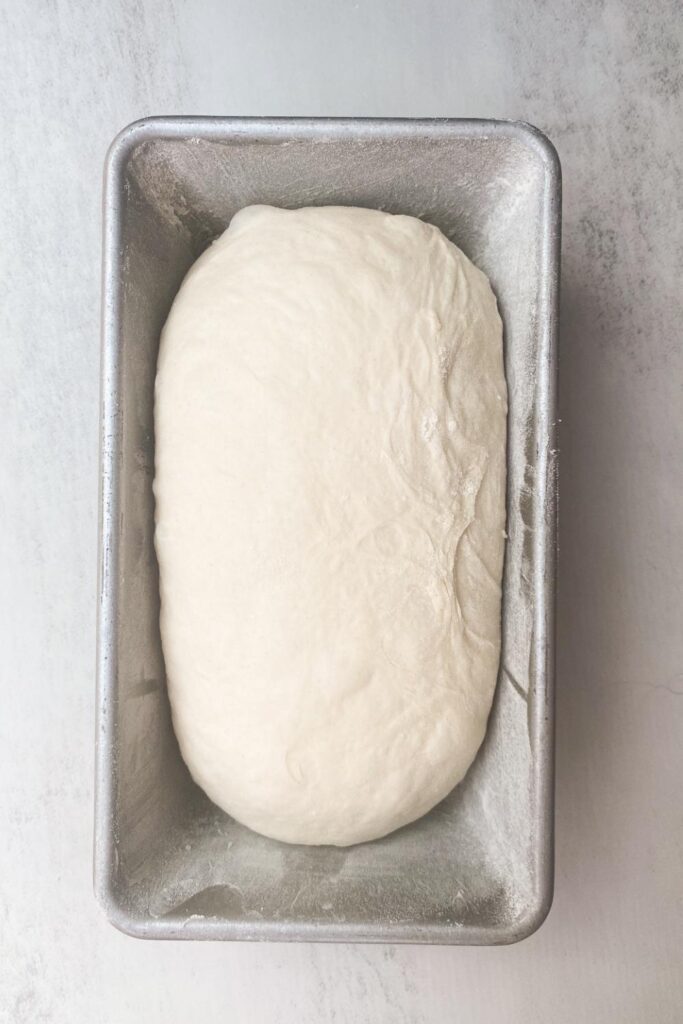
Grease and dust an 8×4 inch metal loaf pan. Use a bench scraper to help you gently pick up the dough and transfer it to the loaf pan.
Cold Ferment
Set the pan in the fridge and let it cold ferment for at least 30 minutes and up to 24 hours- make sure your fridge is cold enough so the dough does not over ferment.
Bake
Remove the dough from the fridge and score.
Place a cast iron pan with water in it on the lower rack of your oven and preheat the oven to 425 degrees F. When the oven comes to temp, open the door slowly to avoid getting hit by steam, then add your loaf to the middle rack.
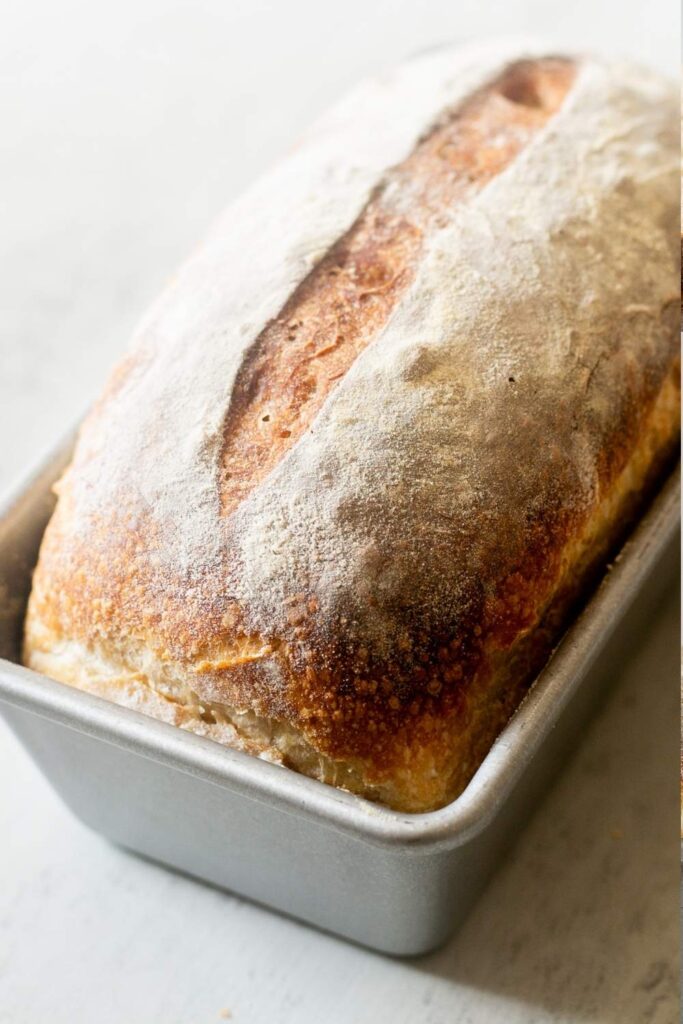
Bake the bread for 25 minutes, then remove the pan of water. Bake for an additional 25 minutes or until the dough is golden brown. Cool for 5 minutes, then transfer to a wire rack and let cool for 1 hour.
Tips
- You can convert this basic, same day recipe to an overnight ferment. Simply reduce the amount of sourdough starter to 60 grams and ferment the dough overnight at a temperature of 72 degrees F. Shape and continue to follow instructions for baking.
- Stretch and folds are not an exact science, so there is flexibility here! Try to get in at least two sets of stretch and folds.
- Shaping bread can take some practice. Try not to overwork the dough or pop the air bubbles. Use a bench scraper to help you transfer the dough to the pan.
How To Bake Sourdough Bread In A Loaf Pan
Equipment
- 1 Large Bowl
- 1 8×4 inch loaf pan
Ingredients
- 350 grams water
- 100 grams active sourdough starter
- 500 grams bread flour
- 12 grams salt
Instructions
Make Dough
- Mix together the water and starter in a large bowl. Add the bread flour and salt and mix until a sticky, loose ball forms. Cover the dough with a damp tea towel or plastic wrap and let the dough rest for 30 minutes.
- With damp hands, stretch and fold the dough by grabbing one side of the dough and stretching it up and over itself. Rotate the dough and repeat, working around the dough in quarter sections, until the dough forms a tight ball. Do 2-4 sets of stretch and folds, spaced 20-30 minutes apart.
Bulk Ferment
- Let the dough rise for 4-6 hours or until almost doubled in size. See notes for tips on when the dough is done bulk fermenting.
Shaping The Dough
- Grease and flour an 8×4 inch pan. Dump the dough out onto a lightly floured surface and form into the loose shape of a square. Pick up the right side of the dough and fold it into the center. Repeat with the left side of the dough. Roll the dough from bottom to top, pulling it towards you several times to create tension in the surface of the dough. The dough will elongate as you pull it towards you. Place the dough in the greased pan and cover.
Cold Ferment
- Place the dough in the fridge to cold proof for at least 30 minutes.
Score + Bake
- When ready to bake, place a cast iron pan with 1.5 cups water on the bottom rack of the oven. Preheat oven to 425 degrees F. Slowly open the oven door and add your dough to the middle rack. Back for 25 minutes, then remove the cast iron pan. Bake for an additional 20-25 minutes or until the crust is golden brown.
- Let the bread cool for 5 minutes in the pan, then transfer to a wire rack and cool for 1 hour.
Notes
- Bulk ferment: Bulk ferment is done when the dough pulls away easily from the side of the bowl, the top of the dough is slightly domed, and there are air bubbles throughout. The dough will feel jiggly.
- Steam: Instead of using a cast iron pan to hold the water, you can use a shallow glass pan. Or, you can top the 8×4 inch pan with another 8×4 inch pan, and remove it halfway through the bake.
- Overnight ferment: Change this recipe to an overnight ferment by reducing the amount of starter to 60 grams and proofing for a longer time period, overnight.
- Temperature: Dough will ferment faster in a warm kitchen and more slowly in a cool kitchen. This recipe was tested at 75 degrees F, making for a fairly quick ferment time.
- Storage: Store bread in a bread box or paper bag for 3-5 days. To freeze, slice and wrap each slice individually in parchment paper, then place in a ziploc bag.




did you realize this recipe says 12 tsp of salt?
It’s grams, thank you for letting me know! 🙂