

Easy Dutch Oven Sourdough Bread Recipe

This easy Dutch oven sourdough bread recipe is perfect for beginners and seasoned bakers alike! This simple bread recipe is one of our family favorites.
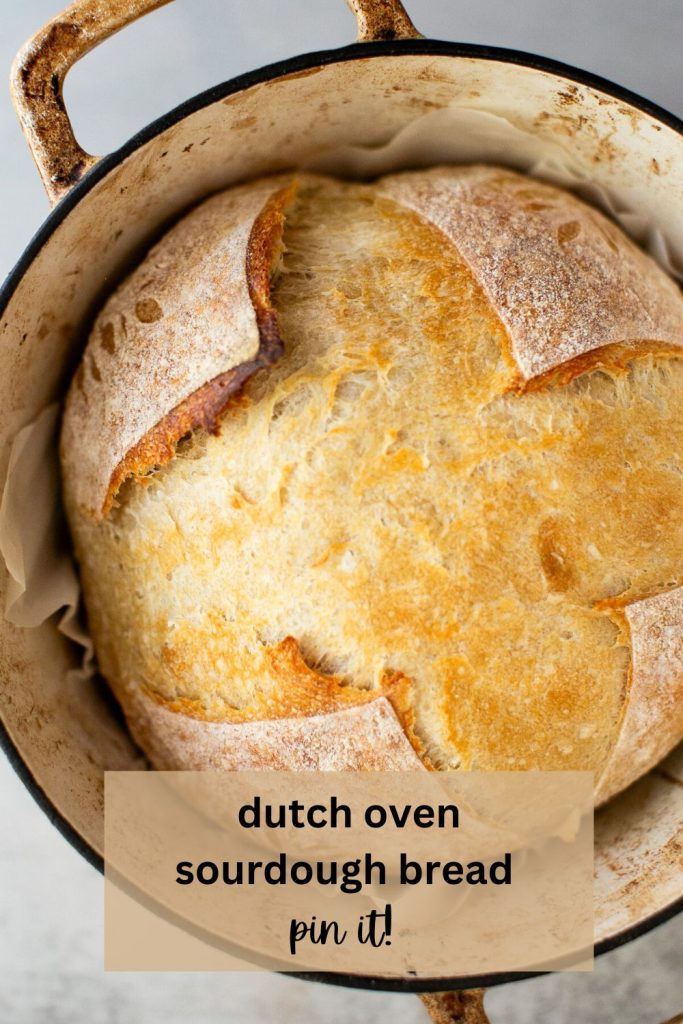
With a golden, crisp crust and soft and fluffy crumb, we slice this sourdough bread and use it for sandwiches and toast.
Learn how to bake sourdough bread in a Dutch oven with this easy, beginner-friendly guide! I walk you through every step, taking the mystery out of baking bread.
You can use a cast iron or ceramic Dutch oven for this bread. This high-heat vessel provides a steamy environment for the bread to bake in, resulting in a crunchy outer crust yet incredibly soft interior loaf.
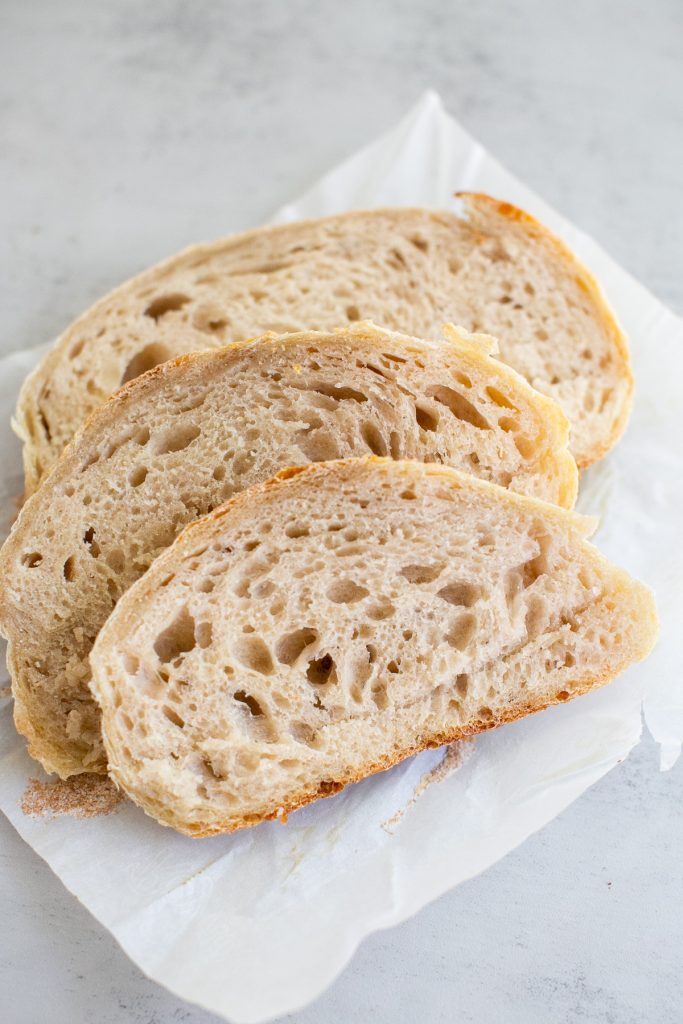
While sourdough sandwich bread is fluffy and soft, this specific artisan-style sourdough bread loaf will give you a rugged golden crust and a chewy, delightful sour tang to the flavor.
This sourdough recipe takes advantage of the wild yeast in your sourdough starter for fermentation. Simply mix your magical starter with bread flour, all-purpose flour, salt, honey, and oil. The next day, shape and bake the loaf. It’s easy to make yet adaptable to delicious seasonal loaves like sourdough maple pecan bread and my sourdough gingerbread loaf.
More great sourdough recipes: jalapeno cheddar, chocolate chip, and simple sourdough loaf for beginners.
Why You’ll Love It:
- Flavorful: This simple sourdough recipe will gives the most fantastic bread you’ve ever tasted. The phytic acid in the sourdough starter works over time to create that unique depth of flavor and tang.
- Easy: I create all of my recipes for busy bakers. Sourdough bread does not need to be complicated, and I firmly believe everyone should have access to sourdough’s health benefits and flavor!
- Versatile: This Dutch oven sourdough bread is a great base recipe. Modify it and make it your own with herbs, chocolate chips, cheese, and more! It’s flexible and fun.
Ingredients
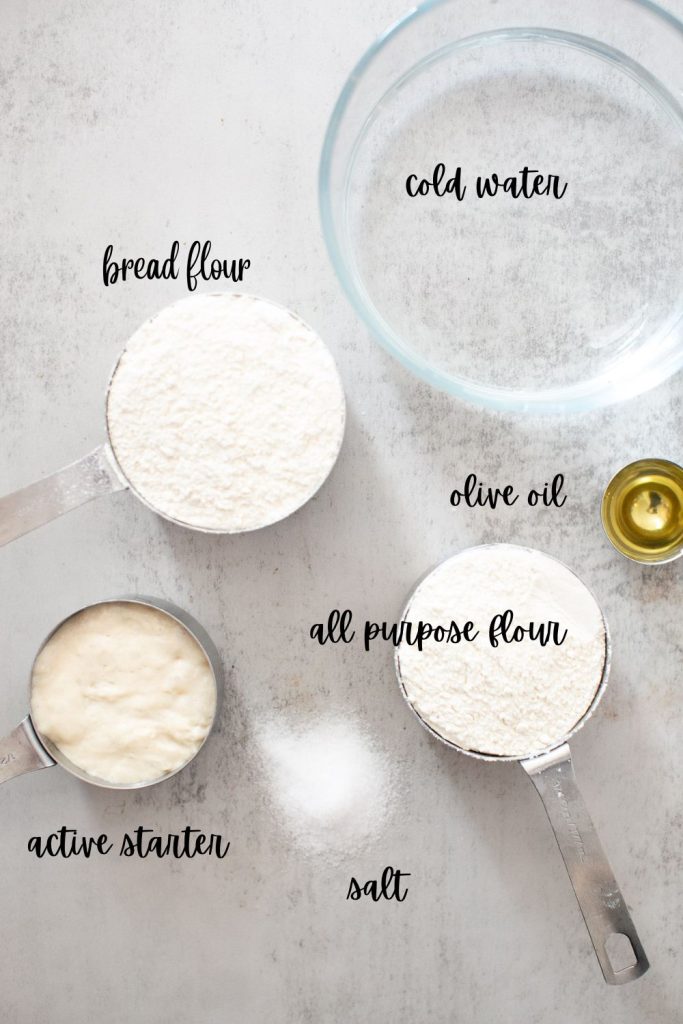
- 350 grams Bread flour
- 150 grams All-purpose flour
- Cold Water
- 1.5 tsp Salt
- 1 TBSP Honey (optional)
- 1 TBSP Olive oil
- 60 grams active sourdough starter
An active starter has been fed 4-12 hours before use and has ideally reached its “peak” in activity. In a warm room, the starter will become active and eat through its food more quickly than in a cold environment. A young sourdough starter will take longer to peak than a mature starter.
Learn how to make a sourdough starter and maintain it.
Baker’s tip: Get to know your sourdough starter. It will react differently depending on the humidity and temperature in your home.
Special Tools You May Need
- Dutch oven: A 5-6 quart Dutch oven is the perfect size for one loaf.
- Kitchen scale: A kitchen scale will allow you precisely measure your flour.
- Large Bowl
- Bench scraper: This optional tool enables you to easily transfer dough.
- Razor blade or lame: A sharp razor can be used to score your bread, allowing the steam to release in one specific direction. You can also use the razor to score unique designs in the top of the dough.
- Banneton basket: This basket is specifically designed to help dough hold it’s shape in the second proof.
All of the above-mentioned tools are widely used by sourdough bakers. Personally, I skip the banneton and simply use a bowl lined with flour or a dry tea towel after shaping my loaf.
I also prefer to use a simple razor when scoring. I never use a dough whisk or any other special tools. Keep it simple wherever you can!
What Is A Dutch Oven?
Dutch ovens are popular bread-baking vessels because they can withstand the hot temperatures required for baking bread. Additionally, the tight lid on the Dutch oven keeps steam released from the dough inside the baking vessel.
This steam encourages oven spring, or how quickly the dough rises. It also helps develop the soft bread crumb while the crust forms a crusty, hard surface.
While you can buy expensive Dutch ovens made specifically for sourdough, you can also find them on sale or even purchase them second hand at garage sales.
Baker’s tip: A black Dutch oven will turn the crust of the bread darker more quickly, as it heats up faster and retains more heat. Darker ovens are more prone to burning the crust. A lighter colored baking vessel will result in a lighter, more golden hue.
How To Make Dutch Oven Sourdough Bread
Mix The Dough:
Set a large bowl on a scale and measure in the water and sourdough starter. Whisk well. Add the bread flour, all-purpose flour, salt, and olive oil to the dough. Combine until you have a rough, shaggy ball of dough. Cover with a damp tea towel or plastic wrap. Let the dough rest for 30-45 minutes.
Stretch + Folds:
To stretch and fold the dough, pull one edge up, stretch it out, and fold it back over the dough ball. Work your way around the dough until each side has been stretched and folded. The bread dough will start to come together into a uniform ball shape.
Save This Recipe!
Summarize and Save This Recipe Content On:
Perform at least two rounds of stretch and folds, spaced 20 minutes apart. You can do more as time allows.
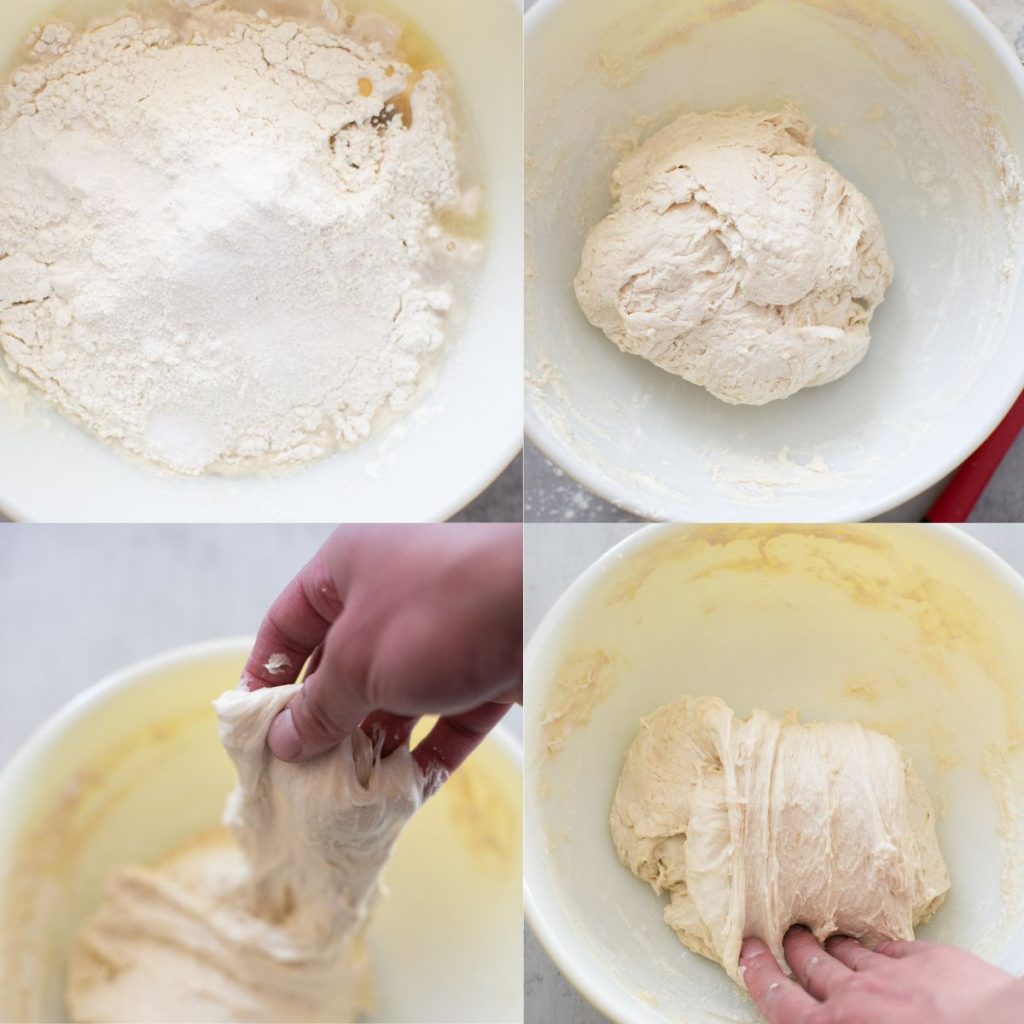
Stretching and folding dough is an alternative to kneading dough that allows air to be added in and the gluten to be developed. The process strengthens the gluten in the dough, ultimately giving structure to the bread dough, making it easier to handle, and developing the crumb.
Bulk Fermentation:
Cover the dough with a damp tea towel or plastic wrap and let it ferment on the counter until it is double in size.
The time it takes to double will depend on several factors: humidity, temperature, and age of starter. My dough typically takes around 9 hours to double with a kitchen temperature of 72 degrees F.
Shape Dough:
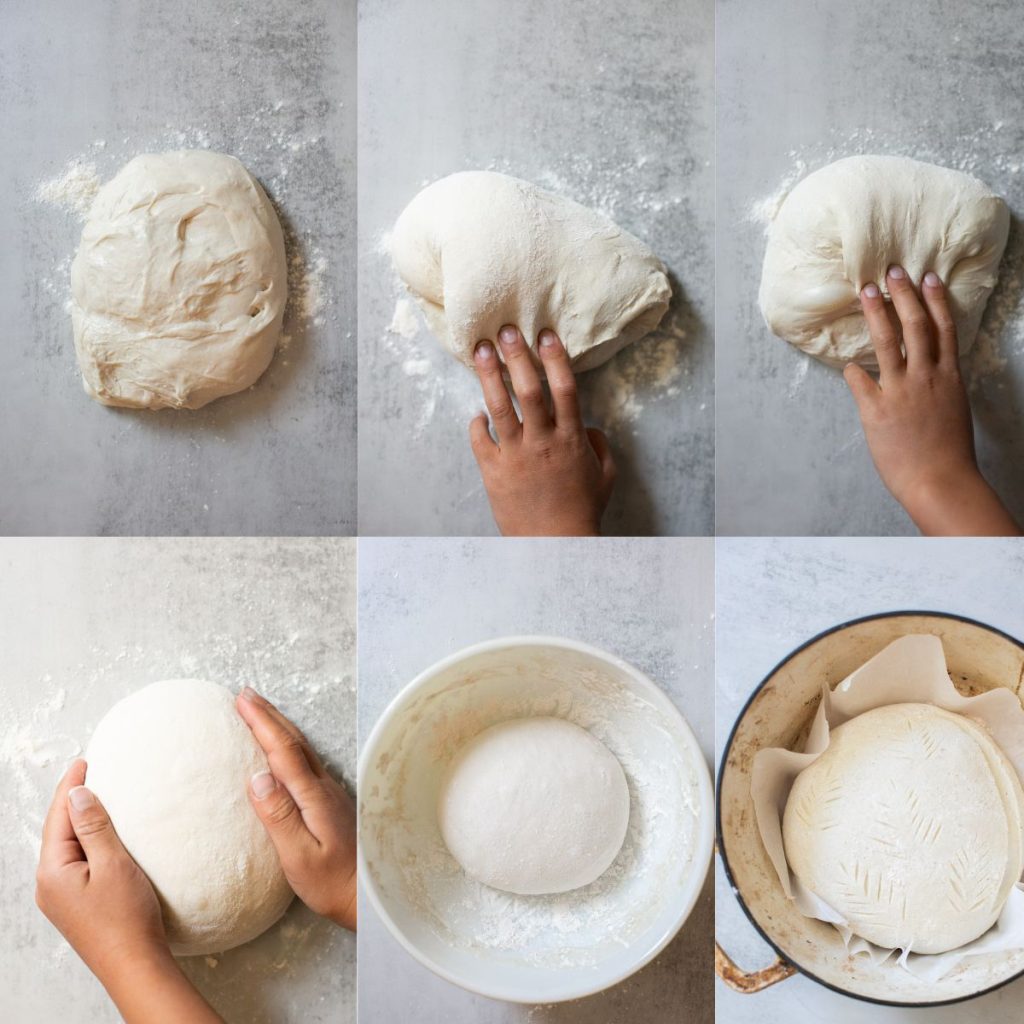
Use a bench scraper (or slightly damp hands) to dump the fermented dough onto a floured surface.
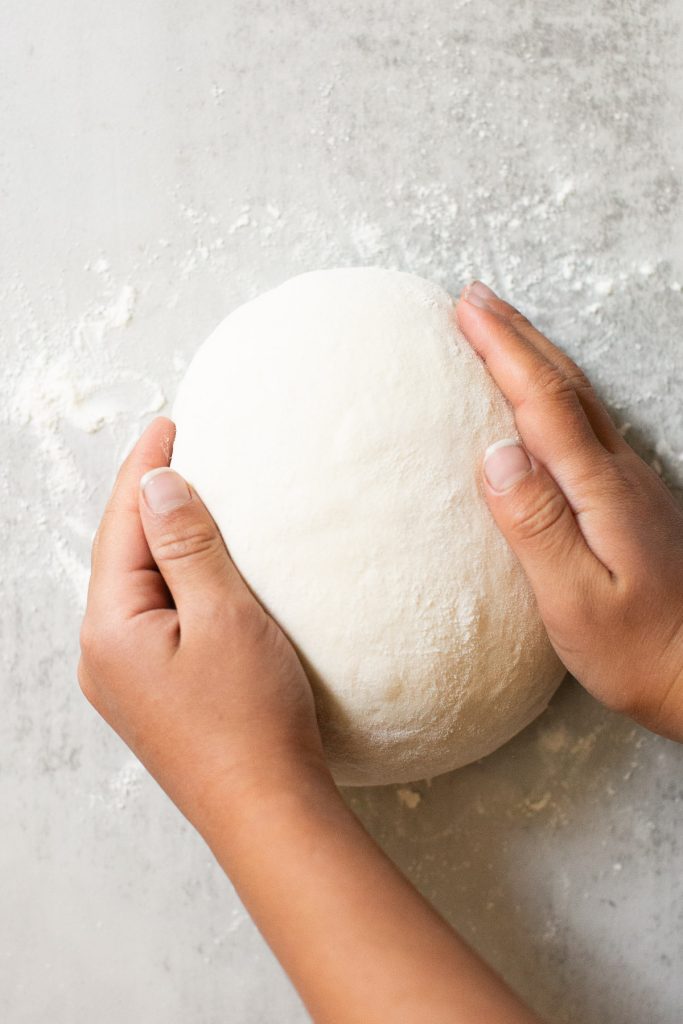
To shape the dough, fold each side inward to create a loose ball. Gently flip the dough over and slowly spin it towards you to add surface tension to the top of the dough. I like to push and slowly pull the dough towards me 7-10 times.
Place the dough into a banneton or floured bowl and refrigerate for at least one hour and up to 24 hours.
Baker’s tip: Longer fermentation time can allow the dough to develop more flavor and become even easier to digest.
Score:
Optional: Freeze the dough for 20-30 minutes before scoring your dough. Cold bread dough is easier to score. Get more bread-scoring tips here.
For best results, score the bread with your razor. A sharp knife will not give very good results when scoring sourdough bread.
A deep score on the side of the bread will provide a specific area for steam to escape and give you a beautiful “ear” on the loaf.
Bake: Preheat the oven to 450 degrees F.
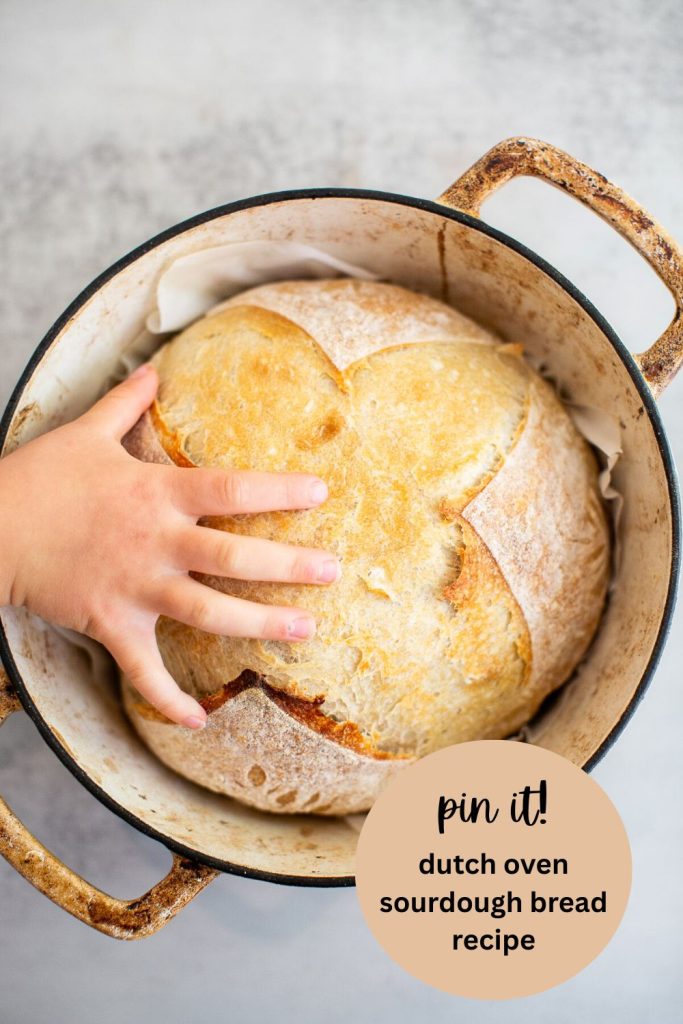
Score and place the dough in the cold Dutch oven. Bake for 25 minutes with the lid on, then remove the lid and bake for an additional 25 minutes or until the dough is golden brown on top.
Let the bread cool for at least one hour—this gives enough time for the steam to cool within the loaf. If you slice the bread while it is still warm, the center of the dough will still be gummy.
Notes on baking sourdough bread in a Dutch oven:
- Always place a piece of parchment paper under the dough. I like to trim the paper so that it does not push into the sides of the bread while it bakes.
- Use a Dutch oven with a tight-fitting lid to prevent the steam from escaping during the bake.
Best Tips For Baking Bread In A Dutch Oven
- Fermentation time will depend on your home’s temperature and your starter’s maturity. Your dough should be double in size with a few bubbles on top when it is done fermenting.
- You can cover your dough with a damp kitchen towel or plastic wrap.
- You will need a mature, active starter for this recipe. Learn more about making a sourdough starter here.
- Perform as many sets of stretch and folds as you have time for. If you only get one set in, your bread will be fine!
- For a same-day bake, feed your starter the night before and add 100 grams of sourdough starter to the dough. Get more info on same-day sourdough bread here.
Baking Timeline
Feed your starter 4-8 hours before mixing the dough.
9 pm: Mix the dough, cover, and let rest for 30-45 minutes
9:45: Stretch + Folds
10:30: Bulk fermentation
7:00: Shape + Place In Fridge
8:00 am: Bake
The Dutch oven can withstand high heat and holds the steam within it while the bread bakes, resulting in a crisp outer crust and soft interior bread crumb.
Bake sourdough bread for 25 minutes with the lid on, then take the lid off and bake for an additional 22-25 minutes.

Dutch Oven Sourdough Bread Recipe
Equipment
- 1 Large Bowl
- 1 Dutch Oven
Ingredients
- 350 grams cold water
- 60 grams sourdough starter active and bubbly
- 350 grams bread flour
- 150 grams all purpose flour
- 1.5 tsp salt
- 1 TBSP olive oil
- 1 TBSP honey optional
Instructions
- Whisk together the cold water and sourdough starter. Then add the all purpose flour, bread flour, salt and olive oil. Add the honey if using. Mix all ingredients together with a dough whisk or damp hands.350 grams cold water, 350 grams bread flour, 150 grams all purpose flour, 1.5 tsp salt, 1 TBSP olive oil
- Cover the dough and allow it to rest for 45 minutes.
- Stretch and fold the dough: Pull up one side of the dough, then fold it over the center of the dough. Work your way around the dough, stretching and folding it. Repeat several times until the dough forms a ball. (see above for photos.)
- Repeat 2-3 sets of stretch and folds every 20 minutes.
Fermentation
- Cover the dough and let it bulk ferment for 7-10 hours or until the dough is double in size and has a few bubbles. See notes for fermentation tips.
Shape Dough
- Once the dough has doubled in size gently dump it out a lightly floured work surface. Fold the sides of the dough in, then turn the dough upside down and gently spin it towards you 7-10 times to build tension on the top of the dough.
- Place the dough into a banneton or floured bowl. Place in the fridge for 1 hour and up to 24 hours.
Bake Bread
- Preheat oven to 450 degrees F. Place the dough into the cold Dutch oven and score. Bake for 25 minutes, then take the lid off and bake for an additional 22-25 minutes or until the crust is golden brown.
- Let the bread cool for one hour before slicing. Enjoy!

Once I set the oven to 450, do I wait for it to be done preheating prior to putting in the loaf? Or do I immediately put it in?
I wait until it’s at 450 degrees F and then put it in!
It came out perfect & it was my first time making it ! I also used your sourdough starter recipe as well. Thank you so much !
Jonique, that is so exciting! Congratulations on getting started with sourdough, I’m so glad your first loaf came out well!! Please keep me posted on your other sourdough ventures and thank you for letting me know how things went.