

Easy Sourdough Gingerbread Loaf Recipe

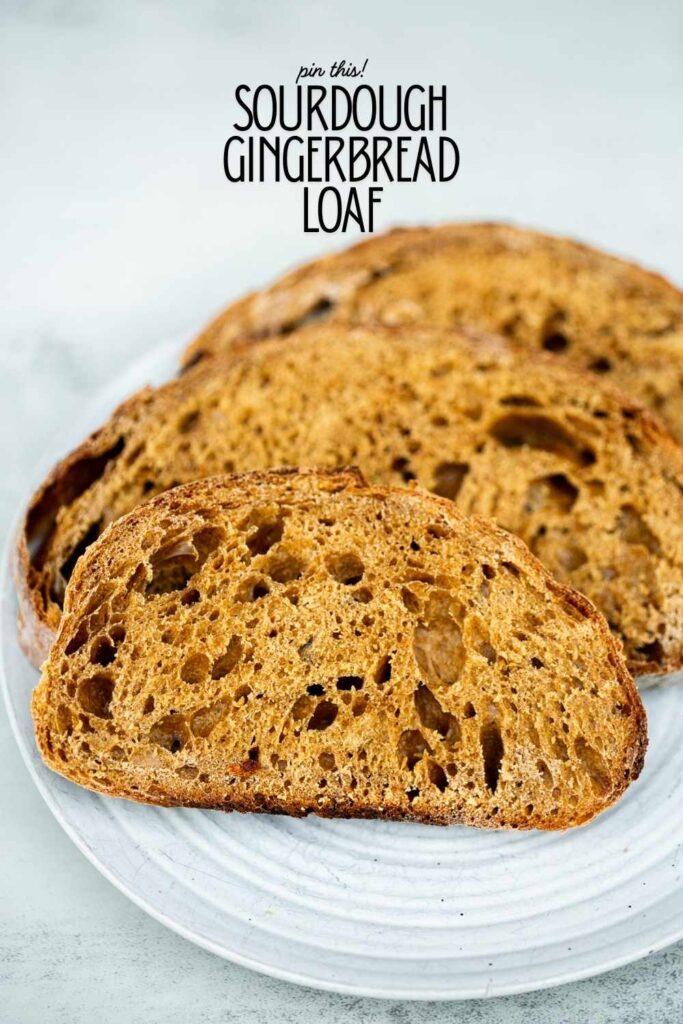
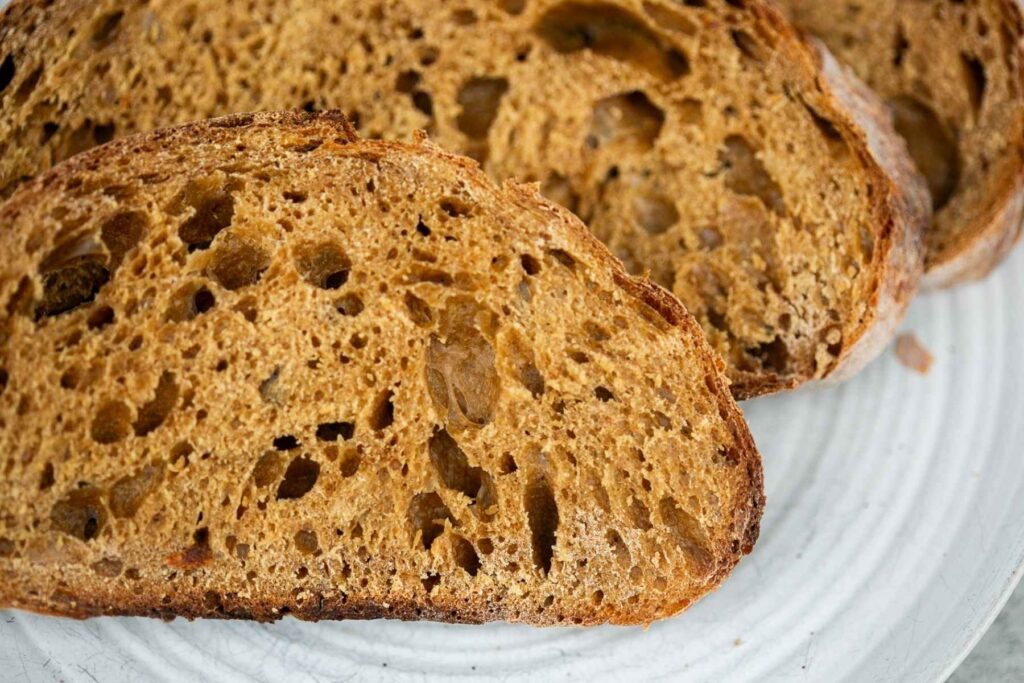
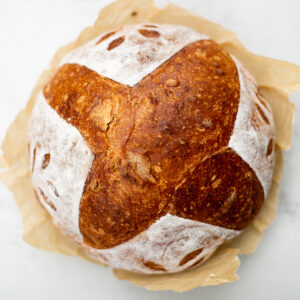
This easy sourdough gingerbread loaf recipe is loaded with the flavors of Christmas! Slightly sweet, complex, and delicious, this festive Christmas bread loaf is rich with molasses, ginger, nutmeg, and brown sugar.
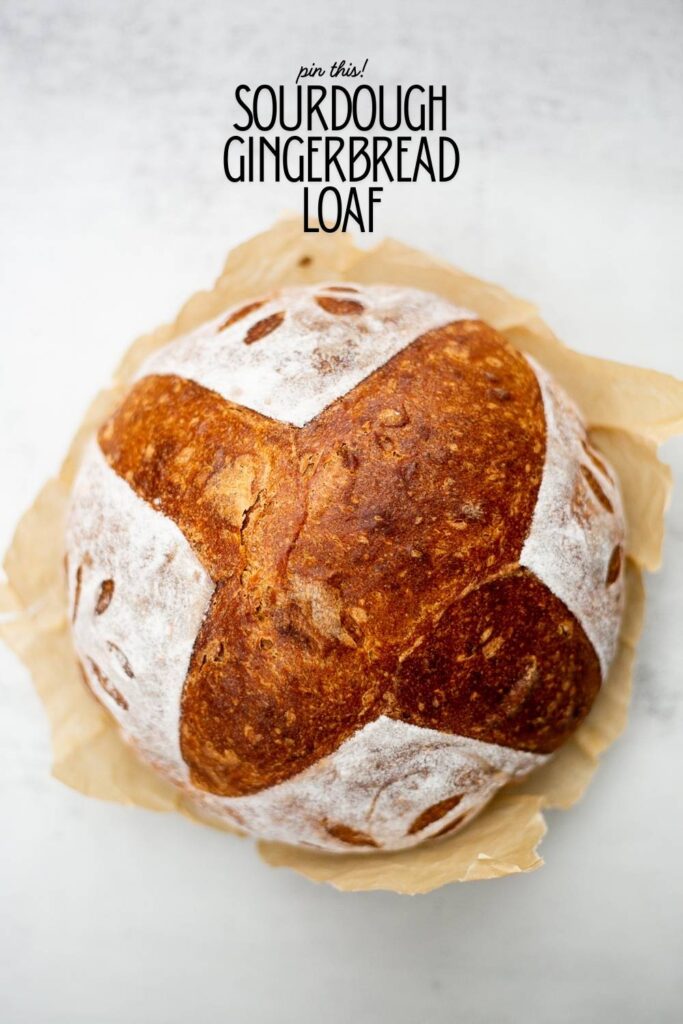
I’m a huge gingerbread fan, so I couldn’t resist experimenting with my favorite seasonal holiday flavors. Like my sourdough pumpkin bread loaf with cinnamon, this artisan loaf is the perfect treat for Christmas eve breakfast or a midday holiday snack.
We love spreading butter or homemade nutella on this sourdough spice bread. The tangy flavors of sourdough combine with holiday spices- yum!
I specifically designed this loaf to be simple and easy to make, as well.. you can bake ferment it over night or same-day, see all of my tips to learn how!
For more sourdough Christmas recipes, try my sourdough cinnamon roll focaccia, sourdough maple pecan bread, sourdough snickerdoodles, sourdough gingersnaps, or sourdough herb bread.
This post contains affiliate links. If you click through and make a purchase, we may make a small commission at no extra cost to you.
Ingredients
- Active sourdough starter- Feed your starter 4-8 hours prior to making this recipe (temperature dependent). You want it to be bubbly and active
- Water – I use filtered water
- Bread flour- all purpose can be substituted in a pinch
- Nutmeg
- Ground ginger
- Molasses- Use light or original molasses, do NOT use black strap molasses.
- Salt
- Brown sugar- adds a little sweetness to this delicious holiday bread!
Learn how to make your own sourdough starter and how to feed it here.
Tips
- To speed up your fermentation time, increase the warmth of the environment, up to 78-80 degrees F. Warmer temperatures are great for same-day baking!
- If fermenting overnight, keep temperatures lower, around 70-72 degrees F.
- Make sure to fully ferment this bread loaf. When adding inclusions, it can be harder to tell when the dough is done fermenting. Look for lots of small bubbles on the surface of the dough, and make sure the dough feels light and airy.
- Refrigeration: If you want to refrigerate this loaf overnight, let the dough ferment until it has increased 30-40%. From this point, shape the dough, place in banneton, and refrigerate overnight.
- For best results, use a kitchen scale for weighing your ingredients.
- The spices in this loaf can slow down fermentation a little bit, so watch the dough for signs of fermentation, rather than the clock.
Timeline
This is the typical timeline I use for this bread loaf. However, you can use the tips above to change the timeline to fit your needs!
10 pm: Make dough and start stretch + folds
Save This Recipe!
Summarize and Save This Recipe Content On:
11 pm: Finish stretch and folds, cover dough, and let rest overnight
8 am: Shape dough + place in fridge for 30-60 minutes.
9 am: Bake bread
How To Make A Sourdough Gingerbread Loaf
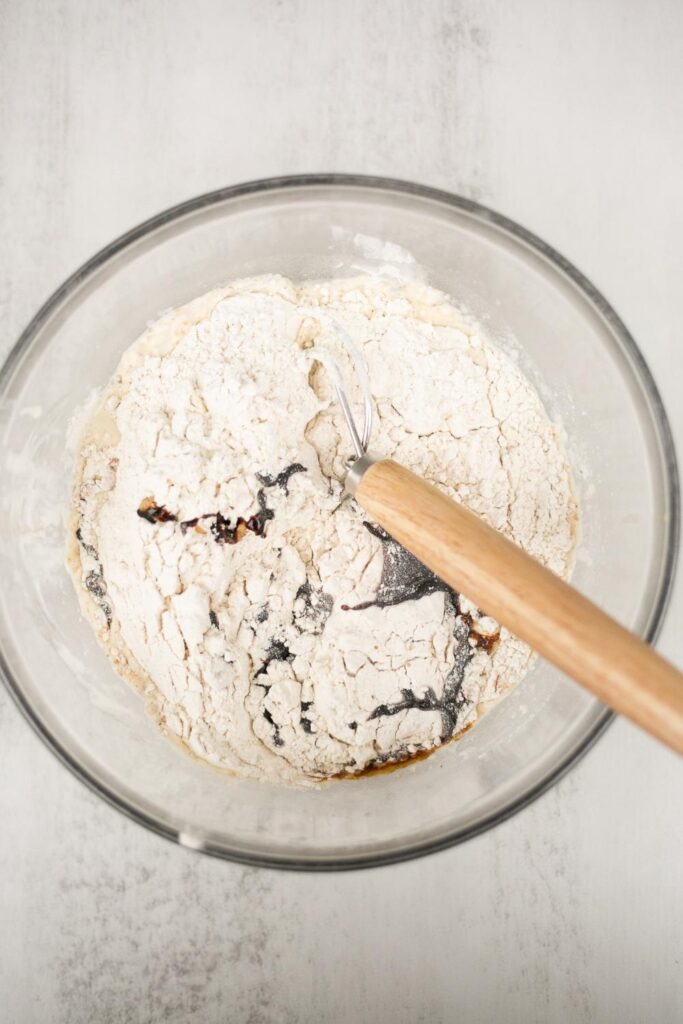
Mix dough: Using a kitchen scale, mix together water and active sourdough starter in a large bowl.
In a separate bowl, whisk together the flour, salt, ginger, and nutmeg. Pour the dry ingredients into the water mixture. Add the molasses to the dough, and mix everything together with damp hands or a dough whisk.
Cover the dough and wait 30 minutes.
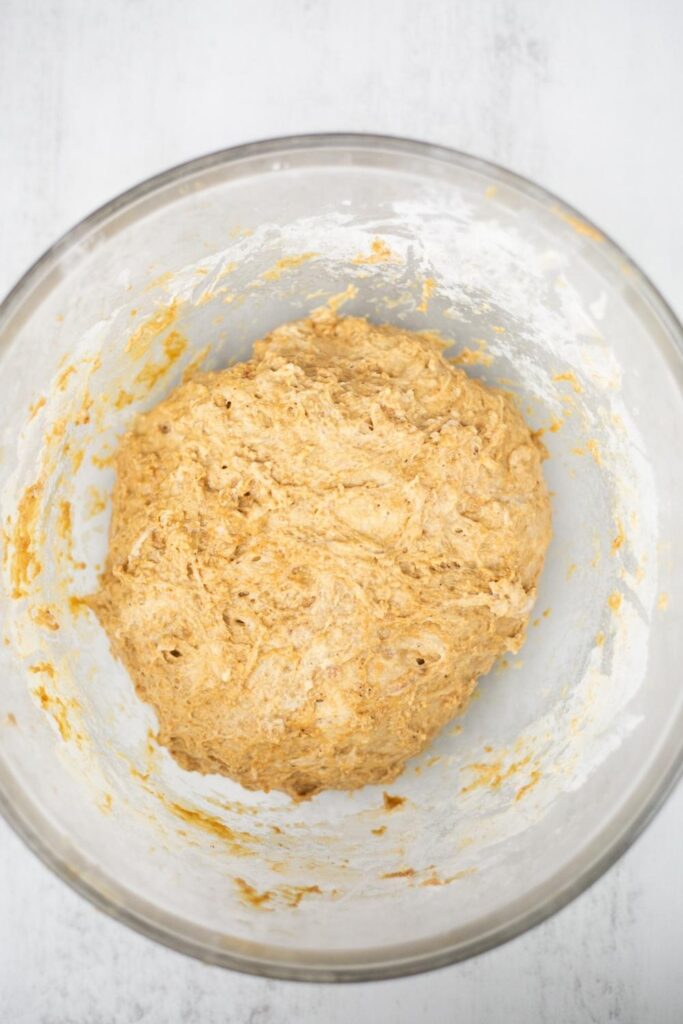
Stretch + folds: Using damp hands, perform the first set of stretch and folds by lifting one side of the dough, stretch it up, and fold it over the dough ball. Turn the bowl a quarter turn and repeat. Work your way around the dough continuing to stretch and fold, until the dough forms a loose ball.
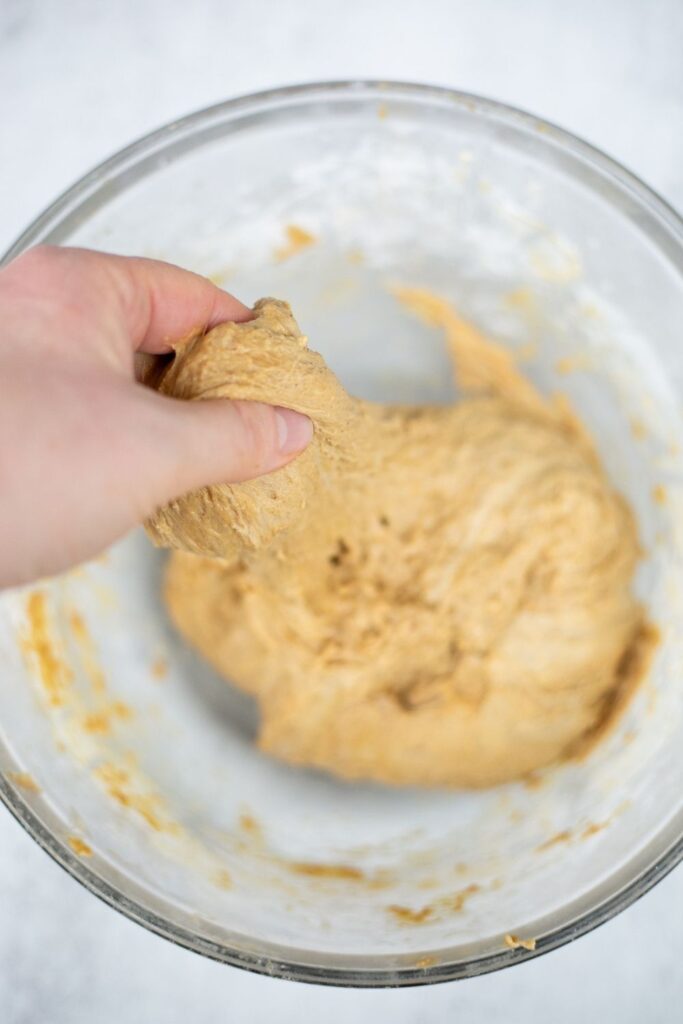
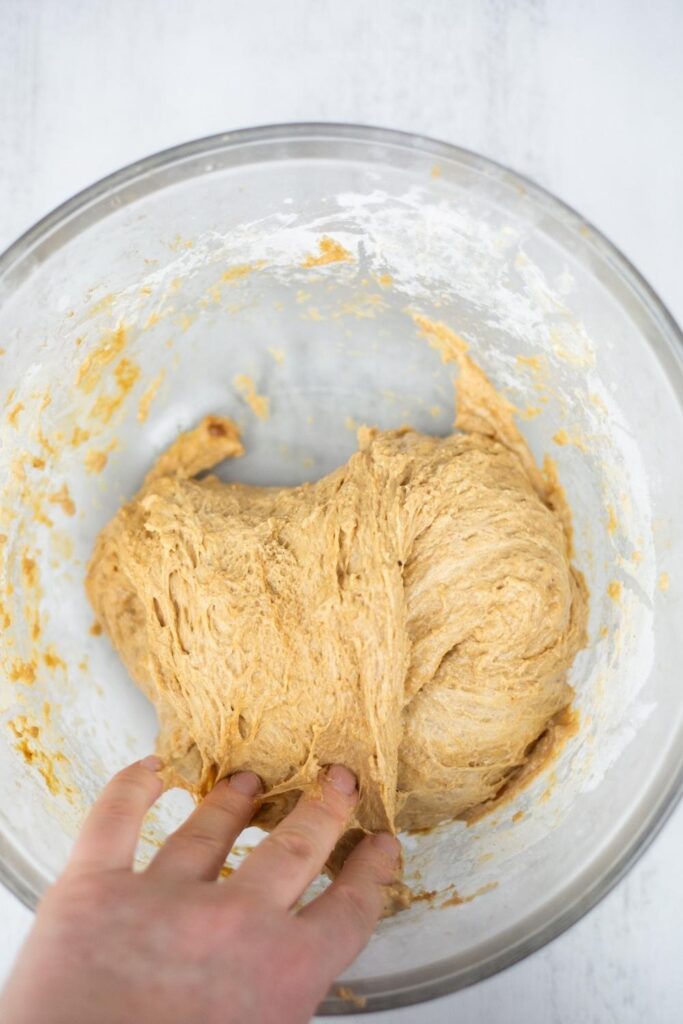
Wait 30 minutes, and perform 2-3 additional sets of stretch and folds on the dough.
Bulk ferment: When finished, cover the dough and let it bulk ferment overnight at 72 degrees F.
The dough is done fermenting when it has bubbles on the surface, is slightly domed, and pulls away easily from the sides of the bowl. It should slide easily out of the bowl with a little help.
Shaping: Dump the dough out on a lightly floured work surface. Shape the dough by folding in four corners of the dough into the center, to make it into a ball. Flip the dough over, and use both hands to gently push the dough in a circular motion.
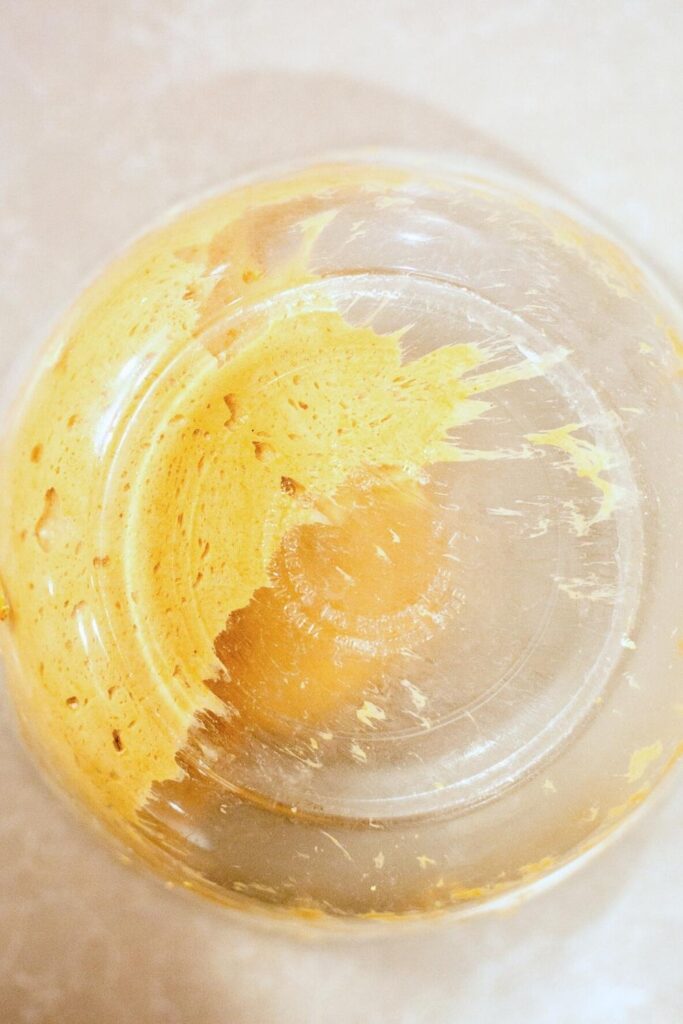
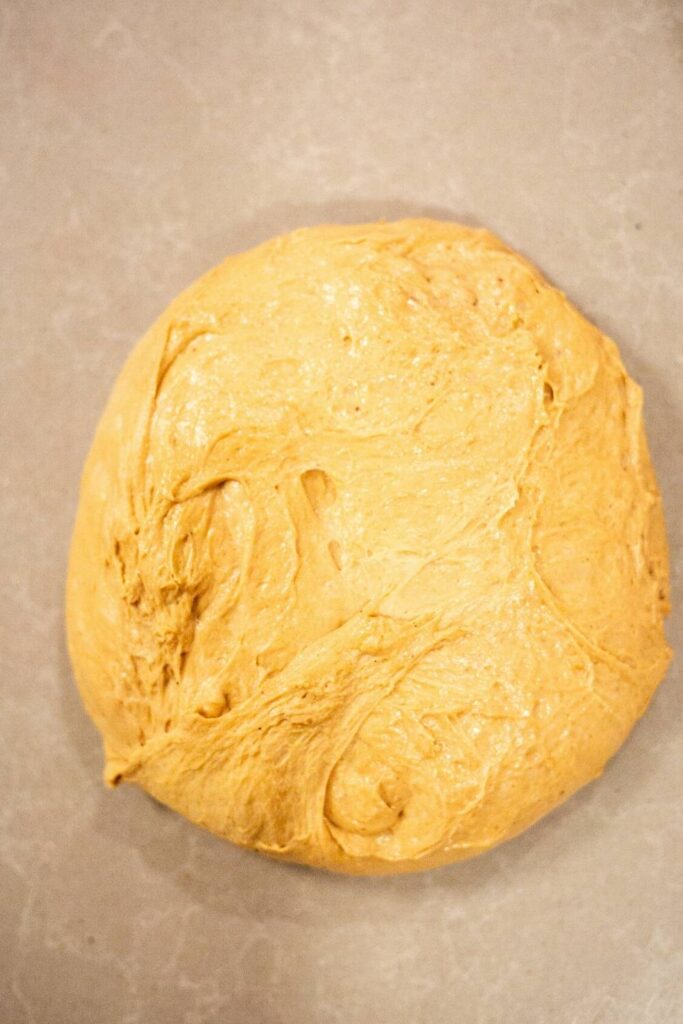
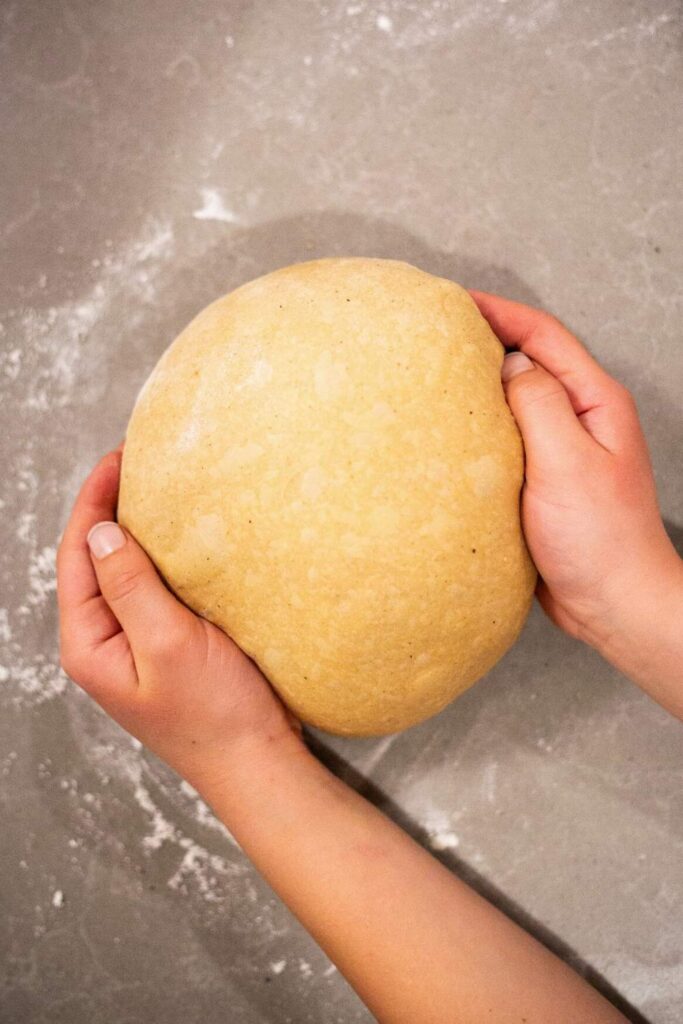
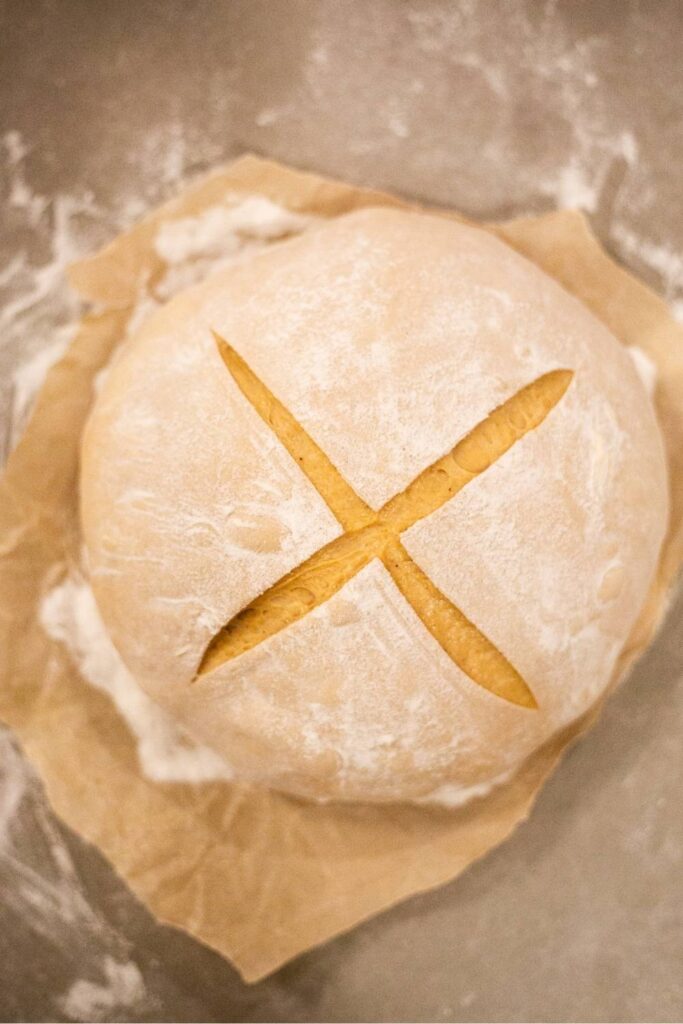
Place the dough in a banneton or in a lightly floured bowl and refrigerate for 30-60 minutes.
Baking: Preheat the oven to 425 degrees F, and place the Dutch oven in the oven for 10 minutes. (You can also use a cold Dutch oven for this recipe).
Place the dough on a piece of parchment paper, then score the dough with a sharp razor. Using long silicone oven mitts to remove the hot Dutch oven and place the dough into it. Bake for 25 minutes.
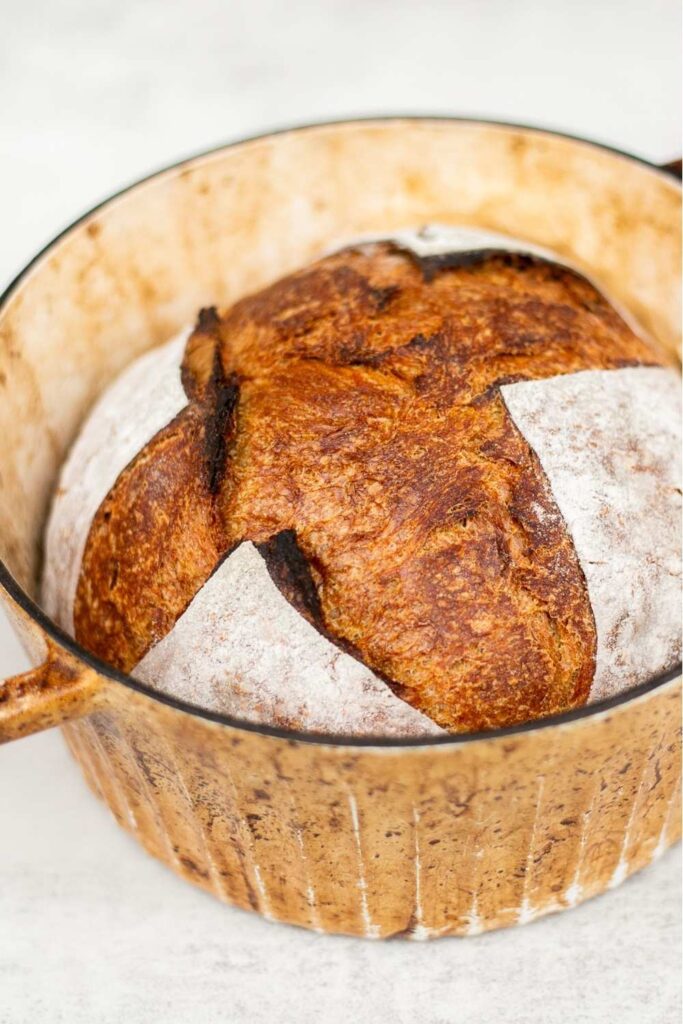
Using your oven mitts, remove the lid of the Dutch oven and continue baking for 22-24 minutes.
Let the bread cool for at least one hour before slicing.
Storage
Store the gingerbread loaf in an airtight container like a ziploc bag for 3-5 days. You can also store it back in an airtight Dutch oven and it will stay fresh.
To freeze, cool the bread completely and wrap it in plastic wrap, then place in a freezer-safe bag. Freeze for 3-5 months.
Alternatively, slice the bread, freeze, then pop each slice in the toaster to warm it up!
Sourdough Gingerbread Loaf
Equipment
- Large Bowl
- Dutch Oven
- Dough whisk or spatula
Ingredients
- 100 grams active sourdough starter
- 300 grams water
- 500 grams bread flour
- 12 grams salt 2 tsp
- 1.5 grams nutmeg 1/5 tsp
- 6 grams ground ginger 1 tbsp
- 75 grams molasses 1/4 cup
- 50 grams brown sugar 1/4 cup
Instructions
- Use a kitchen scale to mix ingredients and combine water and active sourdough starter in a large bowl. In a separate bowl, whisk together the flour, salt, ginger, and nutmeg. Pour the dry ingredients into the water mixture. Add the molasses and brown sugar to the dough, and mix everything together with damp hands or a dough whisk. Cover the dough and wait 30 minutes.100 grams active sourdough starter, 300 grams water, 500 grams bread flour, 12 grams salt, 1.5 grams nutmeg, 6 grams ground ginger, 75 grams molasses, 50 grams brown sugar
- Using damp hands, perform the first set of stretch and folds by lifting one side of the dough, stretching it up, and folding it over itself. Turn the bowl a quarter turn and repeat. Work your way around the dough continuing to stretch and fold, until the dough forms a loose ball. Cover the dough and wait 20-30 minutes, then repeat the stretch and folds. Complete 2-3 stretch and folds total.
- Cover the dough and let it bulk ferment overnight at 72 degrees F. The dough is done fermenting when there are a few bubbles on top, a slight dome to the dough, and it pulls away easily from the side of the bowl.
- To shape the dough, dump the dough out on a lightly floured work surface. Fold the four corers of the dough into the center, to make it into a ball. Flip the dough over, and use both hands to gently push the dough in a circular motion to develop tension in the top of the dough.
- Place the dough in a banneton or lightly floured bowl, cover, and refrigerate for 30-60 minutes.
- Preheat the oven to 425 degrees F. Set the dough on a piece of parchment paper, then score it with a sharp razor or lame. Place in Dutch oven and bake for 25 minutes. Remove the lid of the Dutch oven and bake for additional 23-25 minutes or until the crust is golden brown.
Notes
- To speed up fermentation time, increase the warmth of the environment to 78-80 degrees F. Warmer temperatures are great for same-day baking!
- Make sure to fully ferment this bread loaf. When adding inclusions, it can be harder to tell when the dough is done fermenting. Look for small or medium sized bubbles on the surface of the dough, and make sure the dough feels light and airy before shaping.
- Refrigeration: If you want to refrigerate this loaf overnight, let the dough ferment until it has increased about 40%. Shape the dough, place in banneton, and refrigerate overnight.
- The spices added to the dough can slow down fermentation a little bit, so watch the dough for signs of fermentation, rather than the clock.

First time making this bread and it was a major hit! I live and work in China and make bread to share with coworkers and students. They loved it!! I’ll definitely make it again!! I did end up making it as a same day loaf because of my schedule. It wasn’t as ready to bake as I would have liked but that’s on me! I recommend this recipe for sure!! Great for the fall season!
Hi Kelly! How awesome to know that friends across the world are enjoying this gingerbread loaf recipe, that truly warms my heart. That is so fun that you bring bread in to share with your coworkers and students. Thank you for sharing that you adapted it to a same day recipe, and thank you so much for sharing this sweet review!