

Easy Sourdough Croissant Bread Loaf Recipe

Welcome to the easiest recipe for sourdough croissant bread! This mouth-watering loaf is flaky, buttery, and delicious!
Jump to Recipe
This delicious dough pairs everything my family loves: active sourdough starter, flour, salt, and butter. Combined, they make a sourdough loaf that mimics a croissant!
I have intentionally made this recipe as easy as possible. I’m a busy mom, and I love creating sourdough recipes that are simple to make yet impressive.
Similar recipes: herb sourdough bread, chocolate chip loaf, or jalapeno cheddar bread.

This bread loaf features flaky crust layers and a tender crumb. It’s delicious topped with jam, Nutella, or (dare I say) more butter!
This is not a true croissant, of course: it does not have layered blocks of butter between sheets of dough, nor is it shaped like a crescent. However, it is reminiscent of a croissant in texture and flavor.
If you like croissants, you will fall in love with this loaf! Its buttery layers, flaky crust, and flavor are irresistible. Plus, it’s super simple to make.
Why You’ll Love This Recipe

- This bread loaf is easy: I’ve used my beginner’s recipe as the base and incorporated grated butter into the stretch and folds.
- You can increase or decrease the amount of butter you’d like to use based on your experience.
- Hands off: Mix the dough in the evening, let it rise, and bake the next day.
- You will love this flaky, buttery loaf. It’s decadent and delicious, especially topped with jam or Nutella!
- Stays soft: because of the added butter, this loaf stays soft for 3-4 days.
Ingredients
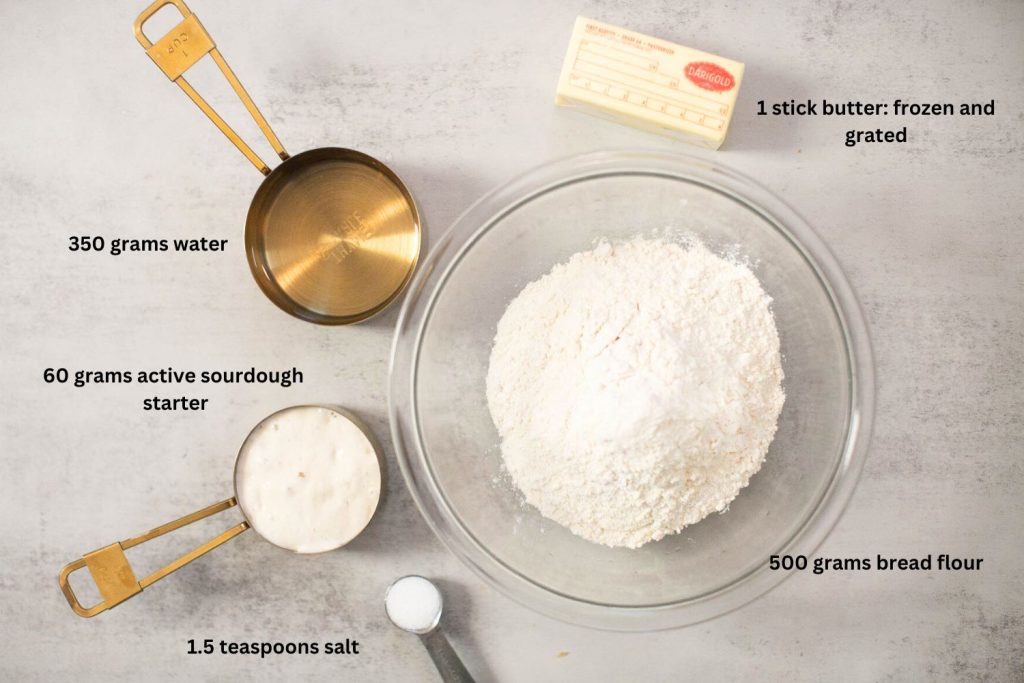
- 500 grams Bread flour- I like to use organic flour when possible
- 1/2 cup unsalted cold butter (refrigerated or frozen). You will grate the butter before putting it in the dough.
- 350 grams of cold water: cooler water will help prevent the butter from melting
- 60 grams active sourdough starter
- 1.5 tsp salt
Baker’s Timeline
Here is the timeline I use to make this loaf:
- 1:00 pm: Feed sourdough starter equal parts flour and water
- 9:00 pm: Create dough base by mixing flour, water, salt, and sourdough starter.
- 9:45 pm: First set of stretch and folds. Grate half of the butter and add it to the dough.
- 10:15 pm: Second set of stretch and folds. Add in the rest of the grated butter.
- 10:20 pm: Cover the dough with a damp tea towel or plastic wrap and let bulk ferment for 7-9 hours at 70 degrees
- 7:00 am: Shape the dough and place it in a banneton. Cover and place in the fridge for at least two hours.
- 9:00 am: Bake in a Dutch oven for 45 minutes.

How To Make Sourdough Croissant Bread
Remember to keep the room temperature around 70 degrees to prevent the butter from melting and making the dough greasy. I like to grate my butter and refrigerate or freeze it before adding it to the dough.
Feed your starter 6-8 hours before making this recipe. You want the starter to be active and bubbly when you add it to the dough.
Here are step-by-step instructions on how to make this mouth-watering sourdough bread:
Mix Ingredients + Autolyse
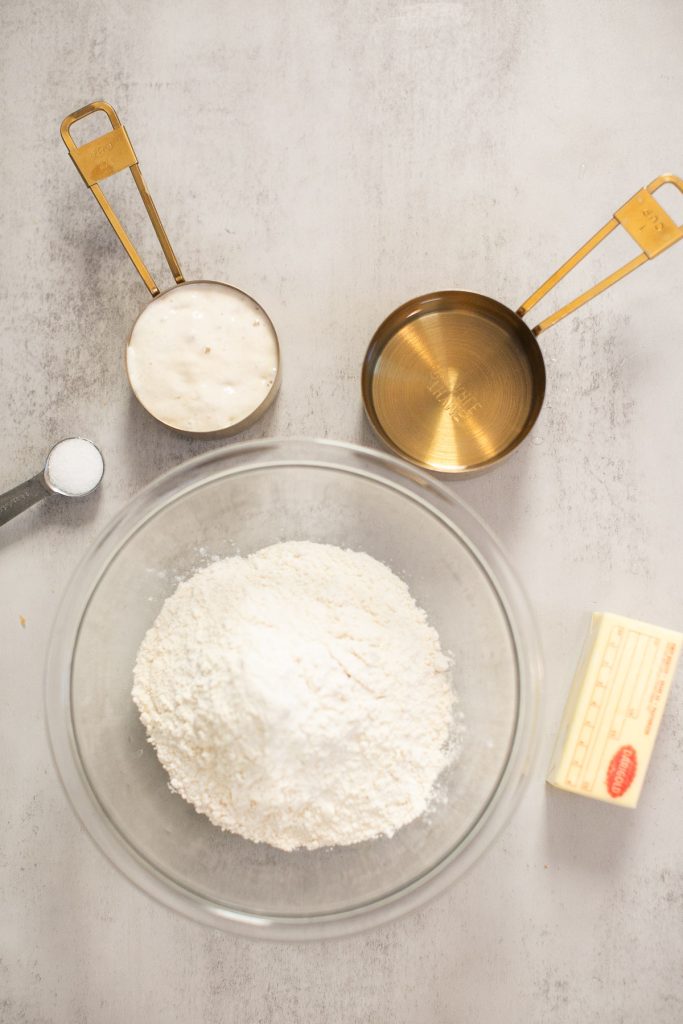
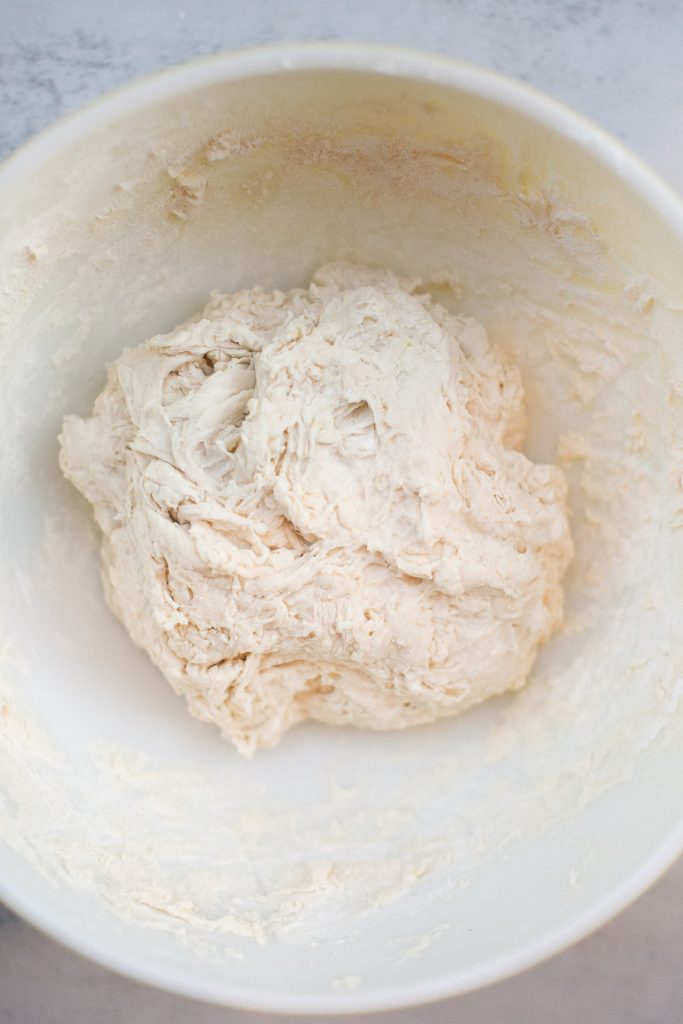
Add the flour, water, salt, and active starter to a large bowl. Mix the ingredients together with slightly damp hands or a spatula until a rough ball of dough forms. This is a very soft, pliable dough; it should feel a bit like play dough, but softer.
Cover the dough with a damp tea towel or plastic wrap and let it sit for 45 minutes to one hour.
Stretch + Folds And Add Butter
Save This Recipe!
Summarize and Save This Recipe Content On:
Now, it’s time to do the first set of stretch and folds and add half of the grated butter. To do the stretch and folds, grab one side of the dough and pull it over the top of itself. Rotate the dough a quarter turn and stretch the dough up and over itself again.
Add half of the butter on top of the dough and mix it into the dough during the stretch and folds. Just pull the dough up and over the butter.
Repeat stretch and folds until the dough forms a tight ball- you will feel it firming up.
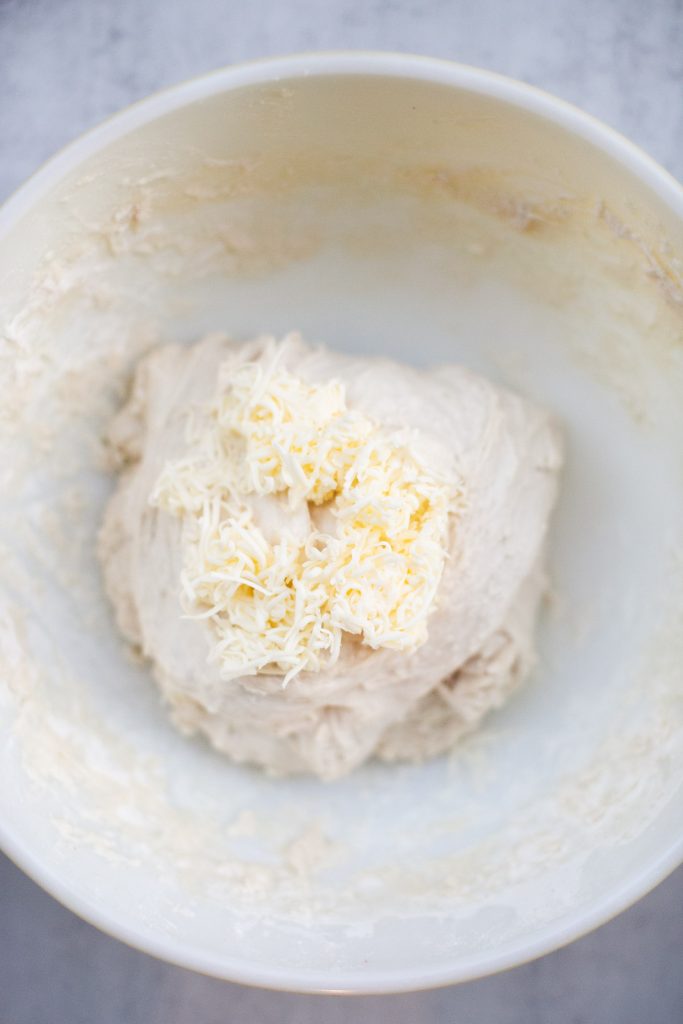
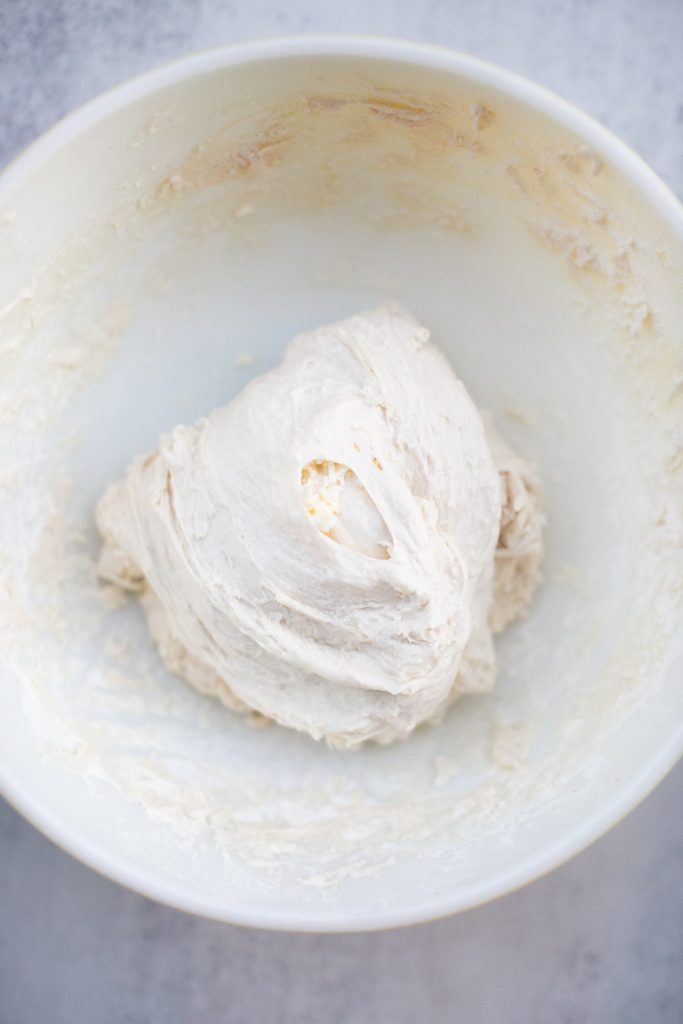
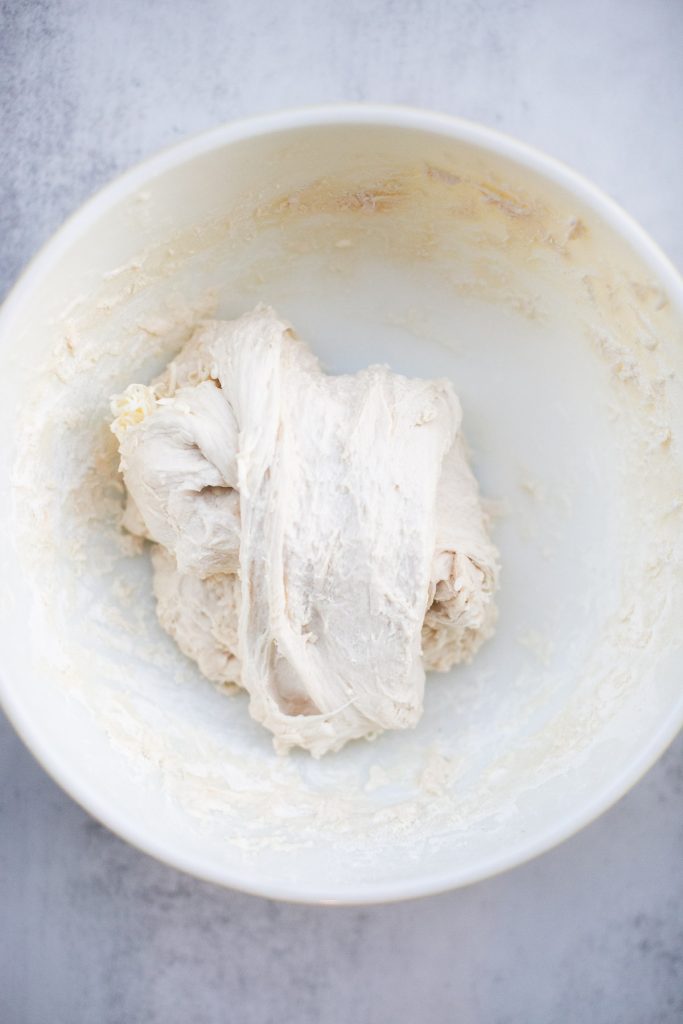
Cover and let the dough sit for 30 minutes. After 30 minutes have passed, add the remaining chilled butter and perform another round of stretching and folding.
Stretching and folding the dough in this way will help you create structure and give you a beautiful, developed crumb. I only use two sets of stretch and folds in this recipe, and the result is the bread you see pictured, but feel free to add an additional set or two if you desire.
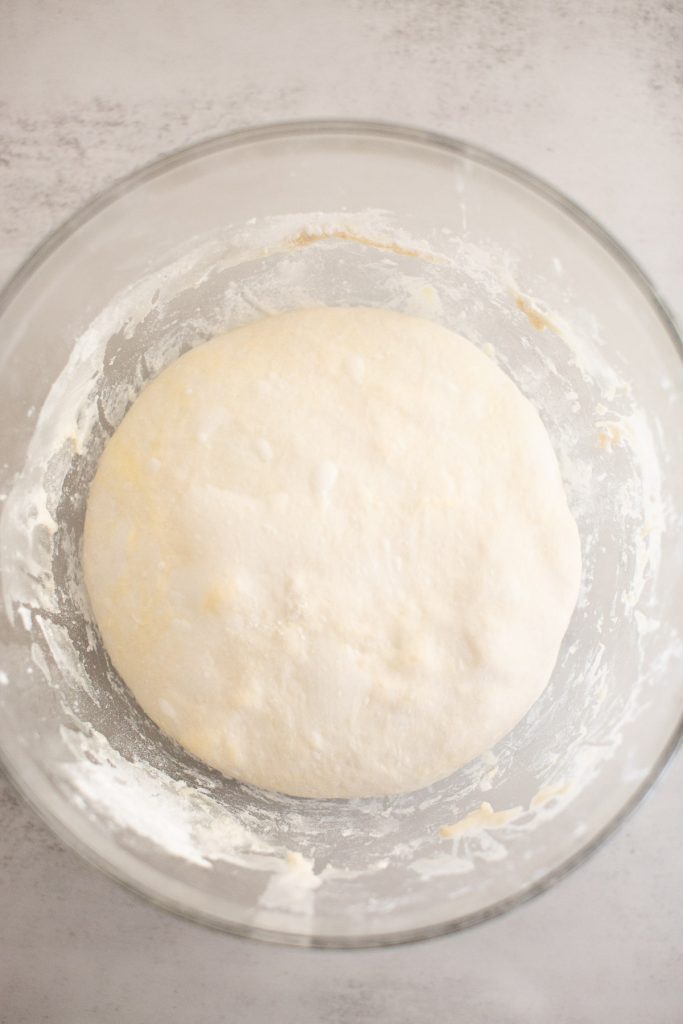
Cover the dough once again and leave it on the counter for 8-9 hours, or until it has doubled in size. Remember that temperature is key for this butter-laden dough—the ideal temperature is 70 degrees F.
Bulk Fermentation
Let the dough rise until it is doubled in size and has a few bubbles on the surface. This took about nine hours for me, at a temperature of 70 degrees F. I tend to err on the side of overfermenting the dough just a tad, and the results are spectacular.
Shape Dough + Second Ferment
The following day, gently dump the dough out onto a lightly floured work surface. Turn the dough over and fold each corner into the center.
To give the dough tension, flip it over, then push the dough lightly with one hand and then pull it in a circular pattern with the other, rotating several times until you can visually see the tension in the top of the dough.
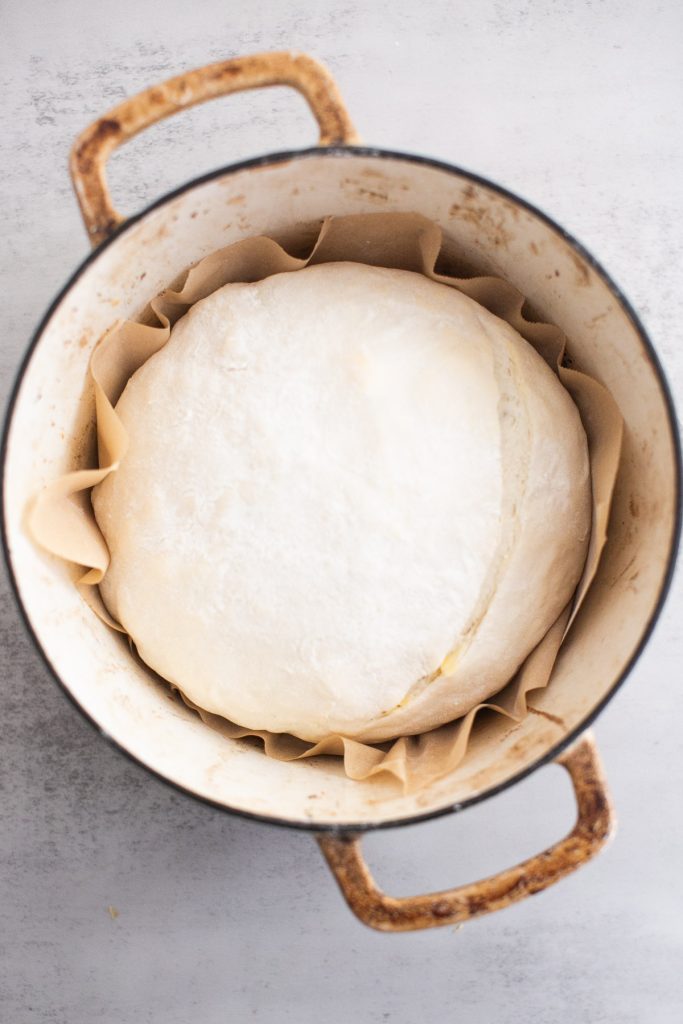
Place the dough in a lightly floured banneton or large bowl, cover with plastic wrap, and refrigerate for 30 minutes.
Chilling the dough is crucial for this recipe: the cold, buttery layers will create flakiness as they bake. Chill in the refrigerator for at least two hours and up to 24 hours.
Bake
I keep my baking process very simple. First, preheat the oven to 450 degrees F.
If needed, gently reshape the dough and place it on a piece of parchment paper. Score the bread and place it in a cold Dutch oven.
Bake for 25 minutes, remove the lid, and bake for 20-22 minutes or until the bread is golden brown.
Wait at least one hour before slicing into this golden loaf!

Recipe Tips + Notes
Before you get started, here are some key tips for making this sourdough croissant loaf:
- Temperature is key: Keep the room temperature around 70 degrees F to prevent the butter from melting during bulk fermentation (range 70-71 degrees F).
- For an easier approach, add half the amount of butter. The bread is still just as delicious and a little easier to handle.
- Add the butter a little during the stretch and fold to disperse it evenly.
- For best results, make sure your butter is cold before adding it to the dough. I like to use frozen butter.
- Use the highest quality butter you can find.
- Make sure to refrigerate the dough for at least two hours before baking.
- Some of the butter WILL leak out of the bottom of the dough, especially if you use the full stuck of butter.

Variations + Add Ons
- Add in chocolate chips for an even more decadent loaf! (Recipe coming soon).
- Toast and slather the slices with strawberry jam or Nutella- seriously, so good!
- Add in raisins and cinnamon for a delicious variation.
- For a sweeter loaf, add in two tablespoons of honey.
- Add herbs like rosemary, thyme, and oregano for a savory flavor.
Storing
Store the bread in an airtight container for up to 5 days. Because of the added butter, the delicious loaf will stay soft and fresh longer than typical bread.
If you’d like to freeze it, slice the bread, wrap each individual piece in plastic wrap, and then put them all in a freezer-safe container. Thaw in a toaster when ready to consume.

Easy Sourdough Croissant Bread
Equipment
- 1 Large Bowl
- 1 Dutch Oven
Ingredients
- 500 grams bread flour
- 1.5 tsp salt
- 60 grams active sourdough starter
- 350 grams water cold
- 1/2 cup cold butter (grated) one stick
Instructions
- Feed your sourdough starter 6-8 hours prior to making the dough. You want an active, bubbly sourdough to add into the dough. Make sure you have a cold stick of butter in the fridge or freezer to use. You can grate the butter now or wait and grate it directly into the bread.
- In the evening, mix together the flour, water, sourdough starter and salt. Combine all ingredients with damp hands or a spatula. The dough will form a loose, soft ball (almost like play dough). Cover with plastic wrap or a damp tea towel and let sit for 45-60 minutes.
- Perform the first set of stretch and folds and add in half of the cold, chilled butter. To do this, pull up one side of the dough, stretch it out, and fold it back over itself. Add half of the butter into the dough and incorporate it by folding it into the dough during the stretch and folds. Cover the dough with plastic wrap or a damp tea towel and let it sit for 30 minutes.
- Do a second set of stretch and folds on the dough, adding in the second half of the butter (if using). Cover the dough and let it sit at 70-71 degrees F for 8-10 hours or until the dough has almost double in size. Do not keep the dough in a warm spot for this recipe.
- The following morning, gently dump the dough out onto a lightly floured work surface. Turn the dough over and then fold each corner of the dough into the center.To add tension to the dough, first flip it over. Push the dough lightly with one hand and then pull it in a circular motion with the other, rotating several times until you can see the tension in the top of the dough. Use your hands to shape the dough as you go.
- Place the dough in a floured banneton or large bowl lightly dusted with flour. Cover and chill in the refrigerator for at least two hours.
- When ready to bake, preheat the oven to 450 degrees F. Place the dough onto a piece of parchment paper and into a cold Dutch oven. Score the dough. Bake with the lid on for 25 minutes, then remove the lid and bake for an additional 20-22 minutes or until the crust is golden brown.
- Let the bread cool for one hour before slicing. Enjoy!
Notes
-
- Keep the room temperature around 70 degrees F to keep the butter cool during bulk fermentation.
- I use a cheese grated to grate the butter into the dough.
-
- Reduce the amount of butter by half for an easier to handle recipe. It’s still delicious!
-
- For best results, make sure your butter is cold before adding it to the dough. I freeze my butter then grate it into the dough.
-
- Use the highest quality butter you can find, I usually use Kerrygold (unless my kids have eaten it all!).
-
- Make sure to refrigerate the dough for at least 2 hours and up to 24 hours before baking.
-
- Some of the butter will probably leak out of the bottom of the dough, especially if you use the full stuck of butter.


Super yummy! Have you tried this in a loaf pan by chance? I want to try making sandwich bread with this same recipe but I’m not sure if I need to change anything.
Hi Jp! I’m so glad you loved this recipe. Yes, you can bake this in a loaf pan for a sandwich shaped loaf, I would not change anything. Let me know how it turns out!
We loved this recipe. it was my first boule EVER. And even my 8 year old with ARFID loves it! Thank you!!
Hi Daria! That is so wonderful, I’m so glad the bread turned out for you! This is one of our favorite recipes as well, and I’m glad your kids loved it!
Have made it several times. It’s super delicious thank you for sharing! I also used it to make sandwich bread I was playing around with the temperature, it ended up great but since you are the pro, would you bake the sandwich in a pan with another to cover on top or not needed to use both? I think I did 450 for 25 min covered and 20 uncovered and lowered to 375 the took it out of the form and baked it for another 5 min to get it crispier? Any better ideas , I am not convinced it was the best way to make it even though it turned out really good. Thank you!!
Hi Katrina! Thank you so much for leaving a review and I’m so glad you enjoyed the read! I usually do not bake sandwich bread covered, however I will have to experience with this specific dough a little bit and see how it bakes with all of the butter. I’ll try it out this week and update you!
Wanting to try for awhile. Glad i finally did! Love it i might add a bit more salt!
So glad you enjoyed the bread Patti. I’m a big salt lover too… I like to use sea salt and add a little extra, haha. Thank you SO much for taking the time to review, it means a lot.
I was wondering if I could use this recipe for rolls instead of a loaf. I was thinking of using double muffin pans for baking them. Any suggestions?
Hi Pat. I’d love to see how that turns out, I’ll have to try it too. The one thing I would say is to lower the temperature maybe to 375 F and bake for a shorter period of time. If you try it please let me know how it goes. When I get home I’ll try a batch as well! Great idea. 🙂
Hello!
Do I have to feed my sourdough starter 6-8 hours prior to making the dough? Or can I make the dough 12-13 hours after feeding?
Hey Brittany! That is just a general guideline. In the cooler temps of fall and winter my sourdough will stay active for longer. If your starter is still active after 12 hours, go for it!
I have been wanting to try a croissant sourdough bread was intimidated until I saw your recipe. Wow! It turned out great, so delicious! I was concerned that it didn’t rise like my other bread because I usually use the Proof feature on my oven. I thought it would be too warm for this recipe, so I let it sit out overnight and then put in the fridge for another 12 hours or so. It turned out beautiful! Thanks for sharing.
Susan, I am so glad that this bread turned out so well for you! Love the overnight tip that you shared, I bet the flavor was delicious. Thank you for taking time to give me your feedback. So glad you enjoyed it!
Hi… this is such a favorite recipe around our house. Question… thoughts on add ins? And if yes… when… last stretch and fold or first?
Thanks 😊
Stephanie
Hi Stephanie! Thank you so much for the review, my family loves this recipe as well! I do have a chocolate version of this recipe: https://gingerhomemaking.com/double-chocolate-sourdough-croissant-loaf/. You could also just add in chocolate chips at first stretch and fold and leave out the cocoa!
You can add Italian herbs or cheese to this recipe as well, I would add them in during the first set of stretch and folds. Probably would not add a ton of cheese, start with a small amount and see how that goes. I was working on a cinnamon version of this recipe and couldn’t get it just how I wanted it… but need to tackle that project again! 🙂
I’ll work on some more versions… this truly is a fun loaf to play with!
Thank you! I added them during the first stretch and fold… both loafs are perfect 😊
Thank you again
So glad it worked out! Yum!
hello, I’m making this bread today, and I have a question for the 8 to 10 hour rest can I do it in the refrigerator? Will it double in size? thank you!
Hi Edith! Refrigeration will actually slow down the fermentation, so I would not put it in the fridge until it has time to double first.
okay, thank you I’ll give it a try hope it comes out delicious.
Please let me know how it turns out!
This is the best recipe! It will be my go to. So yummy, I feel for my waistline!! Thank you for sharing!
Hi Julie, that’s fantastic! Thanks for letting me know.
Dough was quite sticky after refrigerated overnight. Wouldn’t hold shape very well. Baked anyway. Will see how it turns out.
This is AMAZING! I proofed it overnight, it turned out a little flat, would 2 hours be better?
Hi Kate! Thank you so much, I’m glad you enjoyed the recipe! I have never been able to proof dough as quickly as 2 hours, but you could experiment with making this bread in the early morning an then proofing it for 6, 7, or 8 hours, especially if the temperatures are a bit warmer. Let me know what turns out!
This bread was amazing and it was so easy to make. 🥰
Thank you so much for that kind feedback. So glad you enjoyed it, one of our favorites as well!
My house smelled so incredible while this bread was baking. The loaf turned out beautiful, and OMG – the taste. Fabulous. I will definitely make this again! Looking forward to trying other recipes of yours.
Thank you so much for the feedback Sandy! This added butter is such an added bonus to sourdough bread! I recently posted a chocolate version and I’m working on a cinnamon raisin one now, clearly we love it to! Thanks for stopping by. <3