

Easy Overnight Sourdough Ciabatta Rolls

Easy overnight sourdough ciabatta is one of those recipes that looks impressive but is so easy to make! These rolls are perfect for sandwiches, toast, and snacking!

Featuring a chewy open crumb and a crispy crust, these easy rolls are made with just a few ingredients: sourdough starter, flour, salt, and water.
You do not need a baking stone to make these ciabatta rolls… I bake them on a baking sheet in the oven with a cast iron pan beneath to encourage steam.
Ciabatta is similar in texture and taste to homemade focaccia, but in bread roll form.
The dough is mixed together and then given several sets of stretch and folds- just a few minutes of hands on time! There is no shaping, just simple dividing of the dough right before baking.
Crusty on the outside with a soft and chewy interior, ciabatta bread is perfect for sandwiches layered with thin slices of lunch meat, cheese, and your favorite condiments! It’s pretty great slathered with butter for breakfast, too.
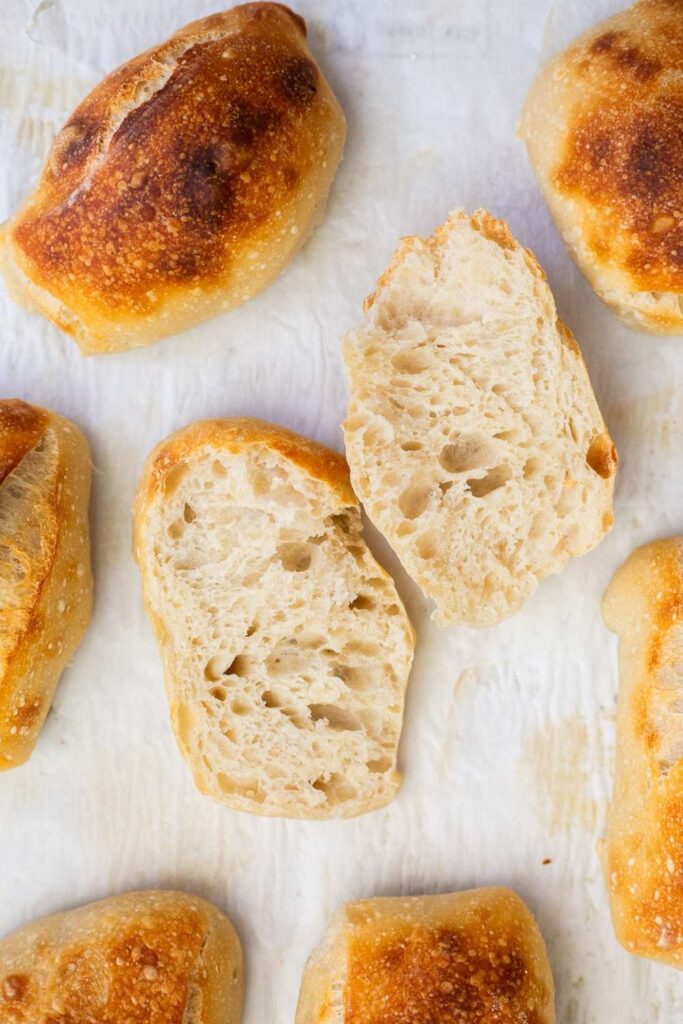
Look at that beautiful crumb!
One of my favorite things about ciabatta is that it doesn’t have to be perfect to be beautiful! Don’t worry about getting the perfect shape on the loaves- it’s supposed to be rustic and charming!
Psst… This recipe was tested in my kitchen by myself and my kids! The photos, written instructions, and recipe are human created and tested.
Looking for more delicious sourdough bread? Try my Dutch oven recipe, sourdough herb bread, or sourdough croissant bread.
Ingredients
You only need a few simple ingredients for this recipe:
- Room temperature water (456 grams)
- Bread flour (640 grams)
- Active sourdough starter– This means your starter has been fed several hours prior to using and is active and bubbly (210 grams)
- Salt- I like using extra fine sea salt (16 grams)
Use a kitchen scale like this one for most accurate results.
This is a medium hydration dough–almost high enough to be considered high hydration, but still easy enough to handle, giving you a dough that is simple to work with with a crumb that is open, beautiful, and delicious!
*You may substitute all purpose flour if needed
How To Make Sourdough Ciabatta
In a large bowl mix together the water, bread flour, active starter, and salt. I like to use a scale to measure out the ingredients accurately in grams- but you can use cups if you need to.
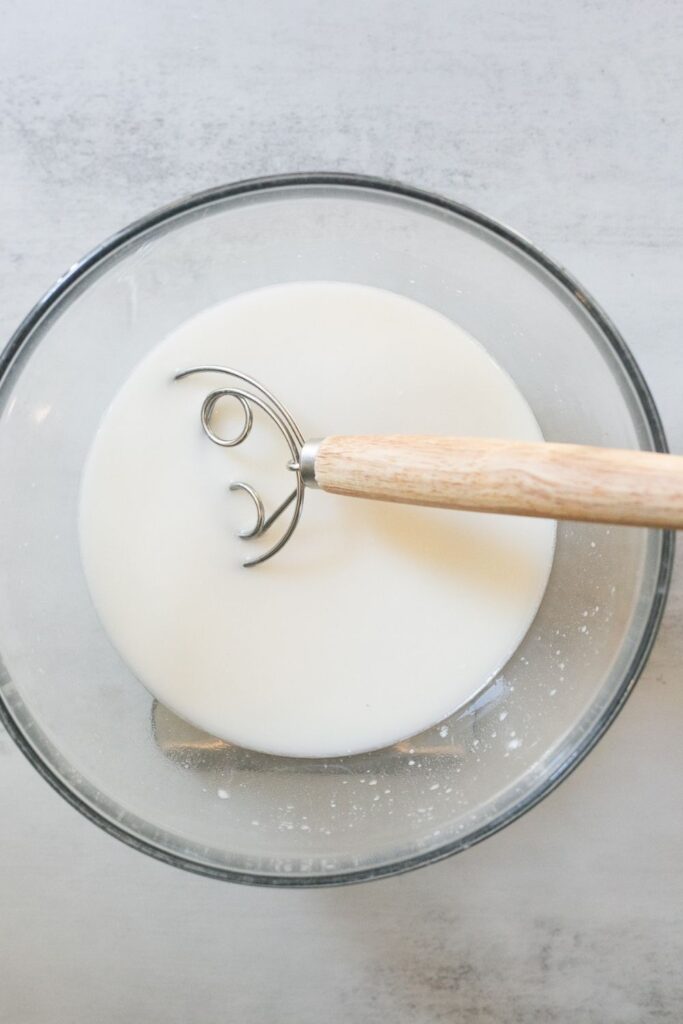
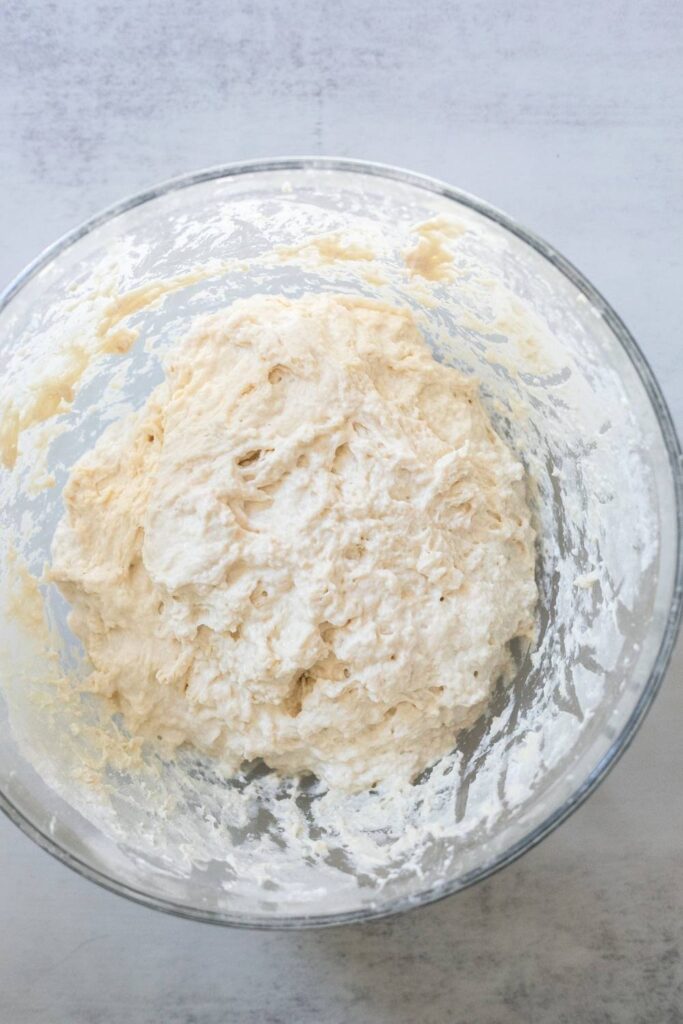
Mix all the ingredients together using either a dough whisk or a spatula. Cover the dough with a plastic wrap or a damp tea towel.
Save This Recipe!
Summarize and Save This Recipe Content On:
Let the bread rest for 20-30 minutes, then perform one set of stretch and folds. To do this, grab one side of the dough, stretch it up and over itself, the fold it over the top of the dough.
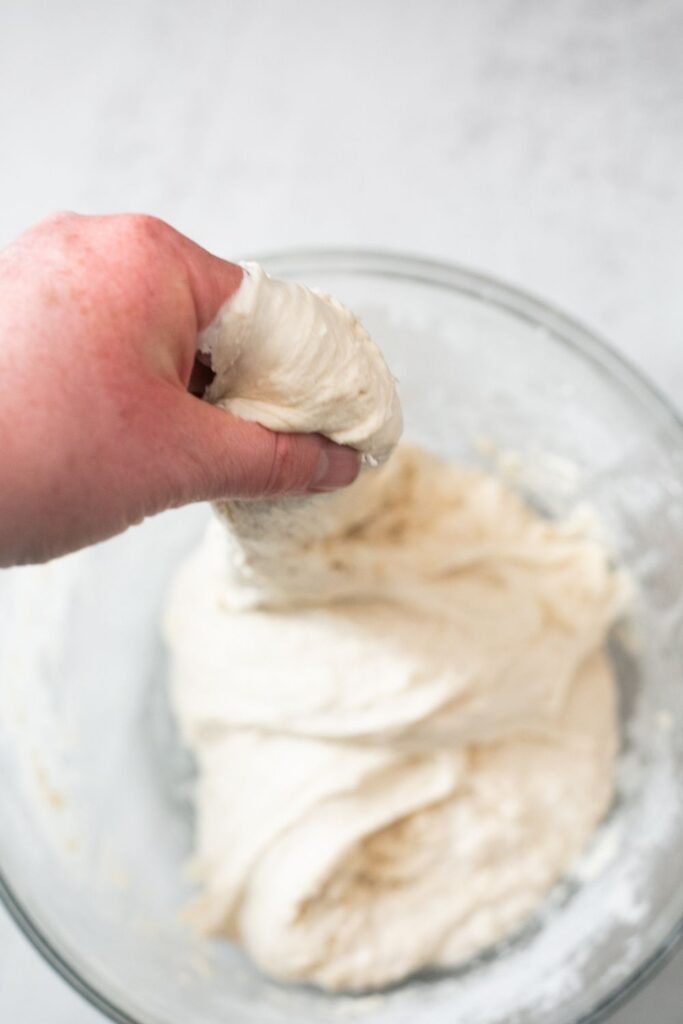
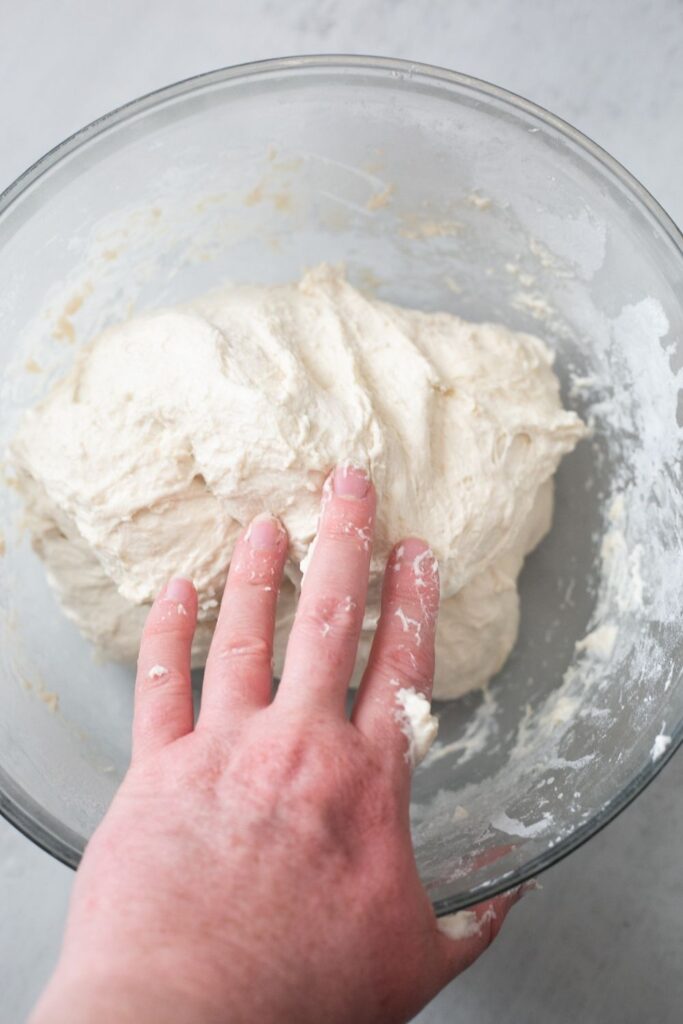
One set of stretch + folds: Rotate the bowl 1/4 turn and do another set of stretch and folds. Work your way around the dough, repeating stretch and folds until the dough forms a tight ball.
Repeat 2 additional set of stretch and folds, spaced 20 minutes apart and covering the dough in between each set.
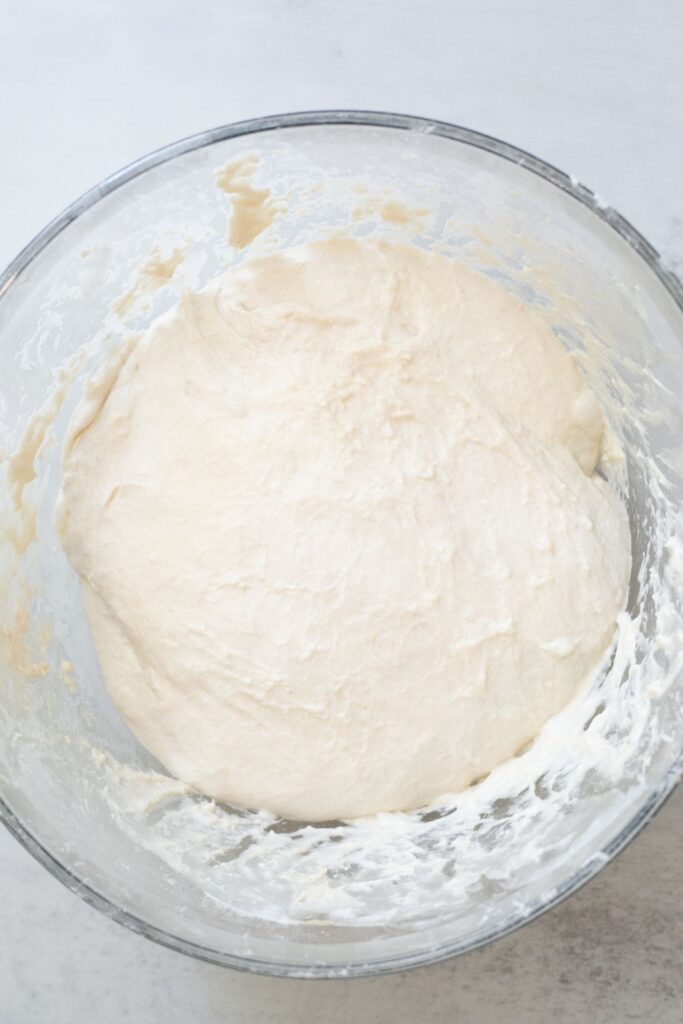
Cover the dough and let it ferment for the first rise at room temperature for approximately 3-4 hours, or until it has risen by about 75%. The dough will have a few bubbles on the surface, and should pull away from the sides of the bowl easily.
*See notes below for tips on fermentation.
Cold Bulk Fermentation
Cover the dough and transfer to the fridge for an overnight ferment for 12-24 hours. If you’d like, you can first put the dough into a rectangle shaped plastic container to store.
Shaping + Last Ferment
Line a large baking sheet with parchment paper.
When you are ready to bake, lightly dust the surface with flour. Dump the dough onto the work surface and gently work it into the rough shape of a rectangle.
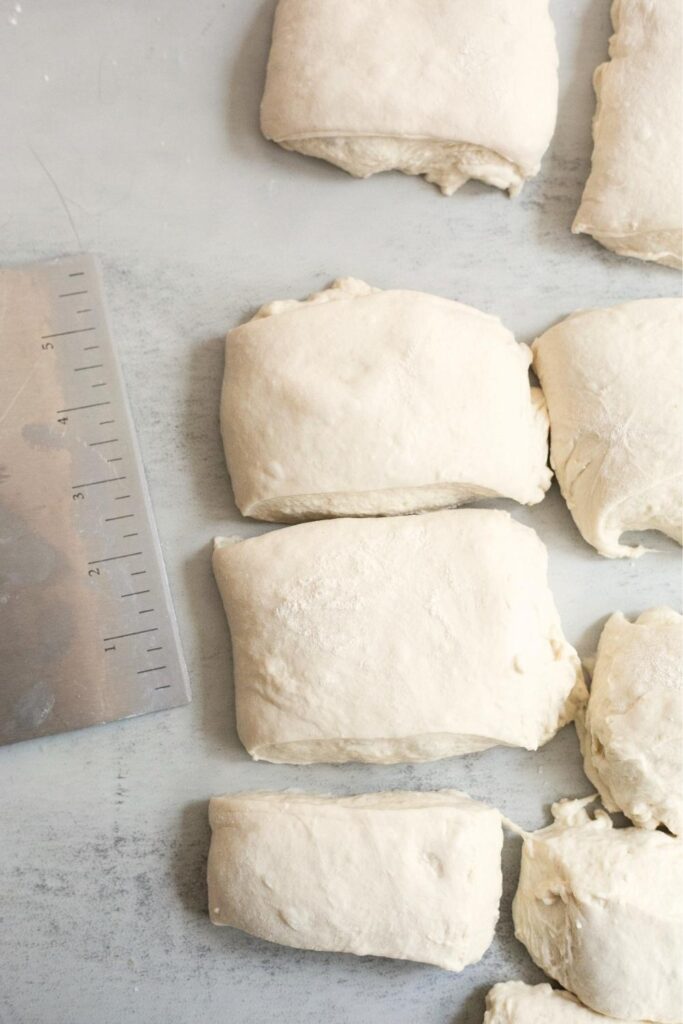
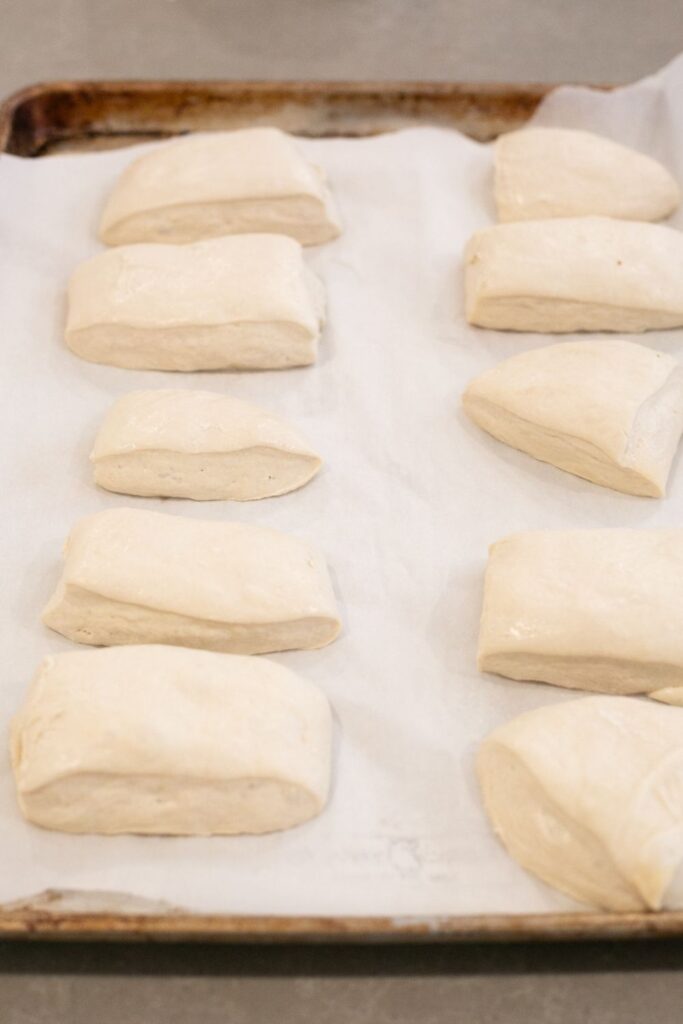
Using a bench scraper, separate the dough in half to make two rectangles, then cut each rectangle into five pieces, so you end up with 10 pieces.
The loaves do not need to be perfect! Set each piece of ciabatta on the sheet pan and cover with plastic wrap or a damp kitchen towel.
Let the dough rest for 1-2 hours or until slightly puffy.
Baking
Preheat the oven to 425 degrees. Add a heat safe cast iron pan with 2 cups of water into the bottom of the oven. Place the ciabatta in the oven and bake for 20-25 minutes, or until golden brown.
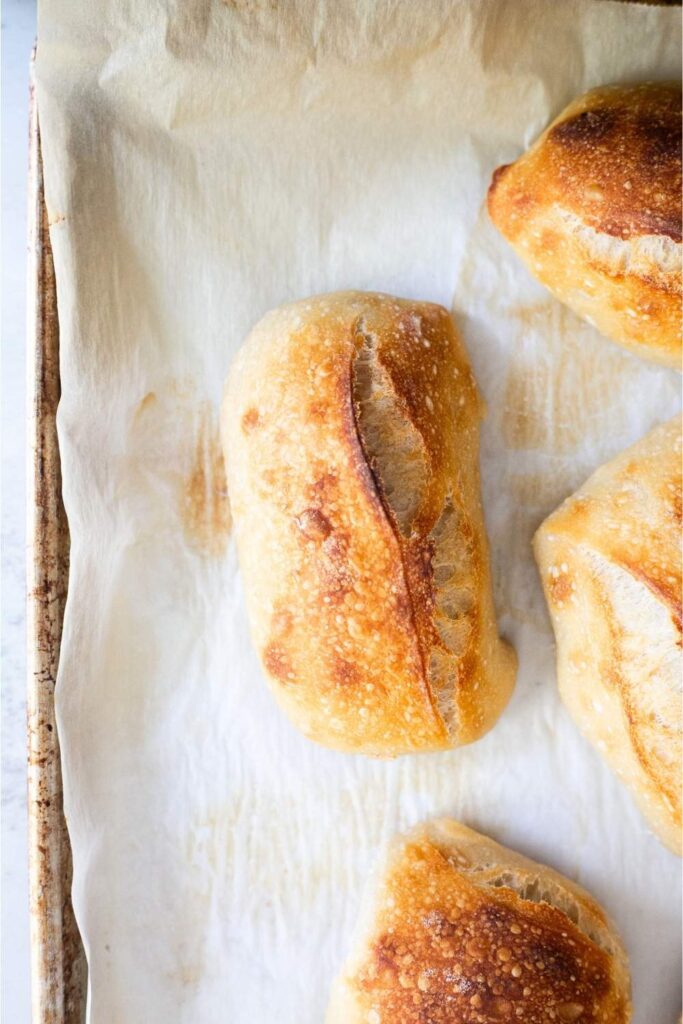
For best results, let the bread cool for one hour before slicing!
Sourdough Ciabatta Fermentation Tips
- In warmer temperatures, the dough will rise much faster that in cooler temperatures. Keep an eye on your dough for signs that it is done fermenting, rather than the clock!
- Signs fermentation is done: The dough should be puffy and jiggle when shaken gently. It will have doubled by about 75% and should pull away easily from the sides of the bowl.
- Optional: Use a rectangle shaped, clear vessel to easily see how much the dough has risen.
Easy Overnight Sourdough Ciabatta Bread
Equipment
- 1 Large Bowl
- baking sheet large
- bench scraper
- Cast Iron Pan or other oven safe, high heat pan
Ingredients
- 456 grams water 2 cups
- 210 grams active sourdough starter 1 cup
- 640 grams bread flour 4 1/2 cups
- 16 grams salt 2.5 tsp
Instructions
- Mix together water, starter, salt, and flour in a large mixing bowl. I like to use a scale to measure out the ingredients accurately in grams- but you can use cups if you need to.
- Let the bread rest for 20-30 minutes, then perform one set of stretch and folds. To do this, grab one side of the dough, stretch it up and over itself, the fold it over the top of the dough. Rotate the bowl 1/4 turn and do another set of stretch and folds. Work your way around the dough, repeating stretch and folds until the dough forms a tight ball.
- Cover the dough and let it rest for 20-30 minutes, than repeat the stretch and fold process. Complete 3 total sets of stretch and folds.
First Ferment
- Cover the dough and let it ferment for the first rise at room temperature for approximately 3-4 hours, or until it has risen by about 75%. The dough will have a few bubbles on the surface, and should pull away from the sides of the bowl easily. See notes below for tips on fermenting.
Cold Ferment
- Cover the dough and transfer to the fridge for an overnight ferment of 12-24 hours.
Shaping
- When you are ready to bake, lightly dust your work surface with flour. Line a large baking sheet with parchment paper. Dump the dough onto the work surface and gently work it into the rough shape of a rectangle.
- Using a bench scraper, separate the dough in half to make two rectangles, then cut each rectangle into five pieces, so you end up with 10 pieces. Set each piece of ciabatta on the sheet pan and cover with plastic wrap or a damp kitchen towel.Let the dough rest for 1-2 hours or until slightly puffy.
Baking
- Preheat the oven to 425 degrees. Add a heat safe, cast iron pan with 2 cups of water into the bottom of the oven. Place the ciabatta in the oven and bake for 20-25 minutes, or until golden brown.Let cool before enjoying!
Notes
- In warmer temperatures, the dough will rise much faster that in cooler. Keep an eye on your dough for signs that it is done fermenting instead of watching the time.
- Signs that the first fermentation is done: The dough should be puffy and jiggle when shaken gently. It will have doubled by about 75% and should pull away easily from the sides of the bowl.
- Optional: Use a rectangle shaped, clear vessel to easily see how much the dough has risen.
- You can substitute all purpose flour for bread flour if need be.
- Add herbs such as rosemary, thyme, or sage to give this ciabatta a delicious herbal flavor!
